
.
.
News
The History of Mary’s Woods
In 2001, SNJM established Mary’s Woods in Lake Oswego, Oregon. This documentary examines the path to opening a continuing care retirement community.
Villa Maria del Mar
Imbued with the Ministry of Hospitality
For over 60 years, Villa Maria del Mar, the SNJM retreat center situated on the shores of Monterey Bay, California, has provided a peaceful, prayerful and renewing space for individuals and groups.
Purchased from the Catholic Ladies Aide Society, who operated the facility as a hotel from 1892 until 1963, the Sisters renamed the building Villa Maria del Mar. On October 31, 1963, Father John Shanks, S.J. and a group of retreatants from Santa Clara University became the first group to experience the new retreat center. Thus began sixty years of ministry.
Today the Villa continues to be a house of hospitality welcoming non-profit organizations, religious congregations, diocesan and ecumenical groups, 12-step programs, worship communities and individuals seeking a beautiful and serene space for prayer, planning, healing, rest and relaxation. The Sisters, Associates and staff at Villa Maria are enriched and inspired by the many guests who experience the Villa for the first time and by others who return for many years of retreat and/or renewal.
The Villa serves as a place of retreat and relaxation for many Sisters of the Holy Names throughout the Congregation. Our Sisters participate in retreats, meetings, conferences and vacations at the Villa.
Located on the property is an original chapel that is used by Villa guests as well as by a worshipping community each weekend. In addition to the weekly liturgy, the Villa Chapel Community participates in food drives and sock and bedding collections for the unhoused in Santa Cruz County and supports the local St. Vincent de Paul Society.
Click here to visit the Villa Maria del Mar website.
Click here to view the Upcoming Retreats page of the Villa website.
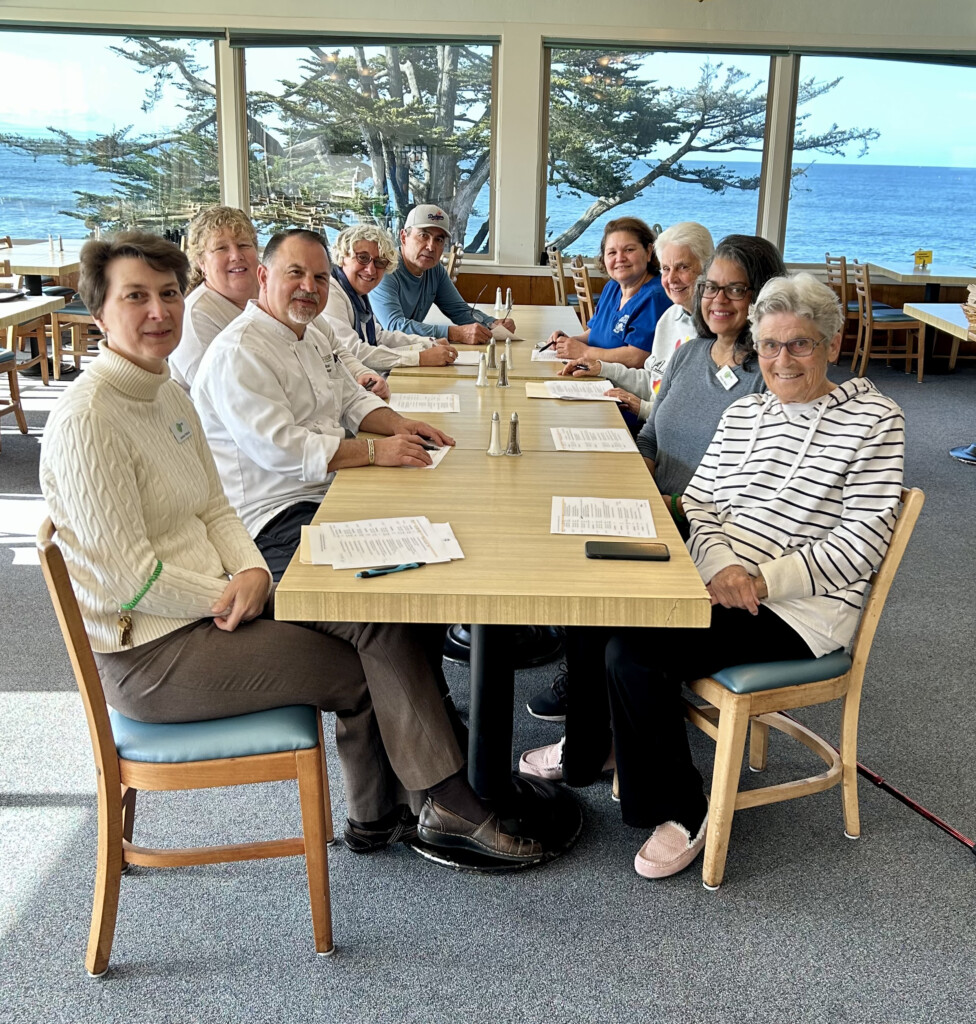
Sisters and staff at Villa Maria del Mar work hard to live the value of Hospitality as a Ministry. Here they are, preparing to welcome guests: (left to right) Joanna, Jeff, Mary, Sister Michelle, Alex, Carmen, Sister Mary, Virginia and Sister Mimi.
Land, Language and the Salish Future
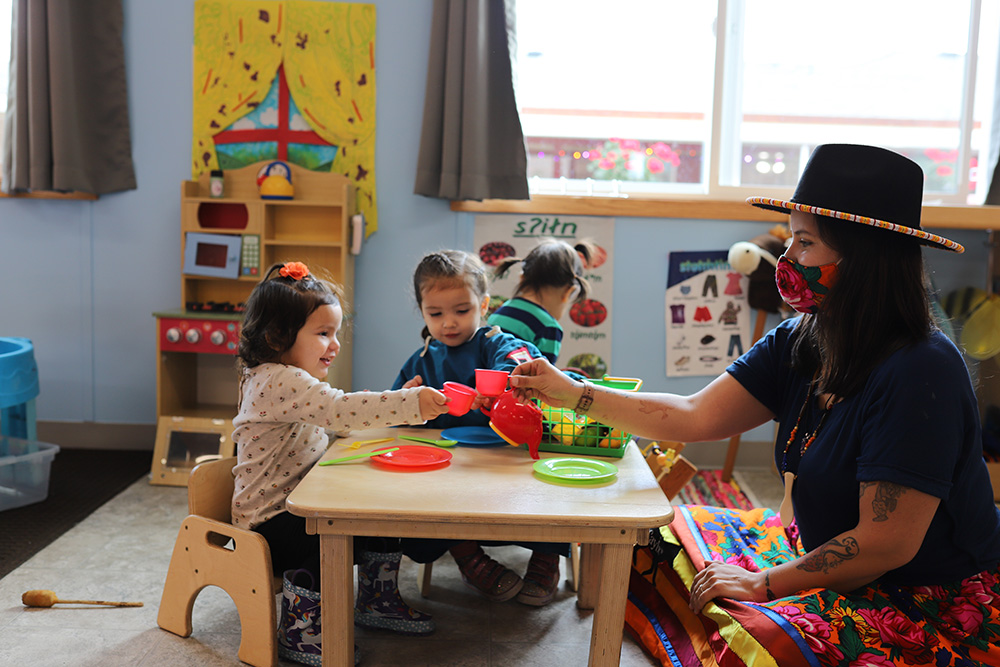
A teacher works with students at the Salish School of Spokane.
The gift of two and a half acres of land to the Salish School of Spokane carries meaning far beyond new buildings. The land, once part of the grounds surrounding the convent of the Sisters of the Holy Names of Jesus and Mary, rests along a stretch of the Spokane River where Salish people historically sustained their community. The Salish, a major Indigenous group, have long inhabited a vast region of the Pacific Northwest, including present-day Washington, Idaho, Montana, British Columbia and parts of Oregon. Donated by Catholic Charities of Eastern Washington, the land’s return to Salish stewardship stands as a meaningful act of preservation and restorative justice.
Founded in 2009 by five Southern Interior Salish women, the Salish School exists to revitalize critically endangered Salish languages and culture. All subjects are taught in the Colville ’ Salish language, including courses in chemistry, math, music, art and history. Enrollment in the school is a family commitment, with parents also required to spend 60 hours per year studying Salish. The new campus will allow the school to expand, providing more classrooms and meeting space as well as a cultural community center. Adjacent to the new Salish School campus, Catholic Charities of Eastern Washington is building “River Family Haven,” a 72-unit supportive housing development for low-income families. At the end of the 15-year investor period, the housing development will also be donated to the Salish School of Spokane. The ultimate vision is to create a Salish village where language, culture and daily life come together.
For co-founder LaRae Wylie and school principal Chris Parkin, this project is the realization of a lifelong dream. It reflects a shared commitment by the school, Catholic Charities and the wider community to honor the past, care for the land and build a future where Salish language, culture and people can thrive. To learn more about the Salish School of Spokane and the new campus project please visit salishschoolofspokane.org.
Rossbrook House Turns 50
On January 20, 1976, SNJM Sister Geraldine MacNamara and a group of young men from Winnipeg’s Centennial neighborhood founded Rossbrook House as an alternative to the streets. Their vision was to create a safe space for young people when other doors were closed. Sister Geraldine inspired all who walked through the open doors at 658 Ross Avenue, and although she passed away in 1984, her spirit remains forever a part of the legacy—and the future—of Rossbrook House.
While receiving the Order of Canada (1983) for her work founding Rossbrook House, Sister Geraldine articulated the guiding principle: “No child who does not want to be alone should ever have to be.”
She would have been the first to say that Rossbrook House was never her dream alone, but rather the dream and creation of the young people she met on the streets near her home in Winnipeg’s inner city in the early 1970s.
The operational philosophy, then and now, is based upon two fundamental principles: self-help and self-referral. Rossbrook staff are drawn from the community of regular attendees, allowing for a realistic understanding of the participants’ needs and aspirations. The hopes, dreams, and ideas of the youth are what determine the programs and direction of the centre.
You can learn more about Rossbrook House at rossbrookhouse.ca
Read more about Rossbrook House in this article by the CBC: Winnipeg youth drop-in centre Rossbrook House a ‘home away from home’ for 50 years, executive director says
Originally published on snjm.org on Jan. 21: https://snjm.org/en/blog/2026/01/21/rossbrook-house-turns-50/
Prayer, Presence and the Work of Justice
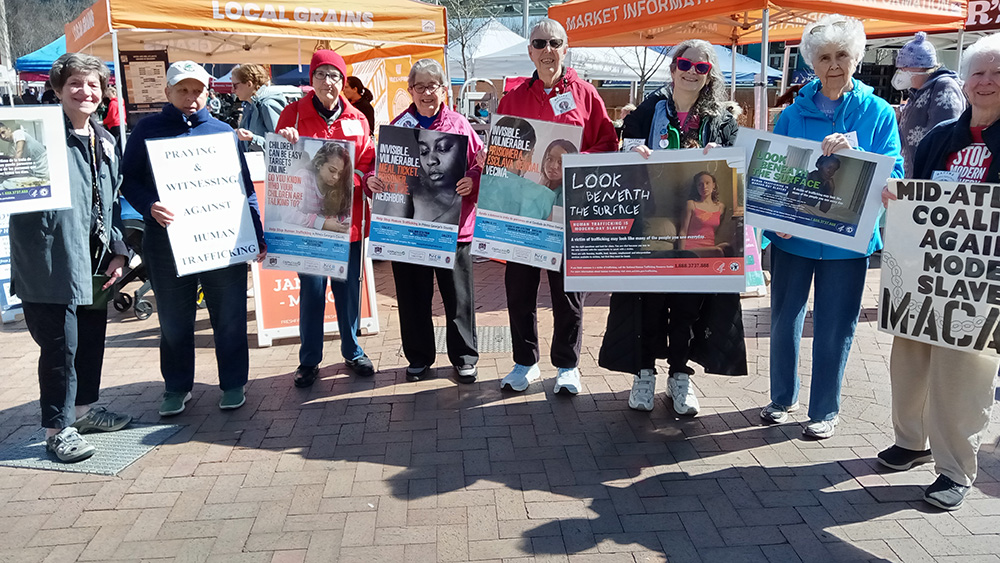
A MACAMS gathering in 2024.
More than twenty-five years ago, SNJM Sisters Carroll Ann Kemp and Carol Ries invited a few women to gather in their home to learn, to listen and to understand the growing reality of human trafficking. At the end of that first meeting, Sister Carroll Ann offered a quiet challenge, “What if, next time, each of us brings one more person?”
When they met again, the group had more than doubled. What started as concern quickly became commitment. From that living room gathering, the Mid-Atlantic Coalition Against Modern Slavery, MACAMS, was born.
As the work of MACAMS unfolded, it echoed a wider movement within the Congregation of the Sisters of the Holy Names of Jesus and Mary. In 2004, the Congregation issued a Corporate Stand against trafficking of women and children, committing all Sisters to this justice ministry.
In the years since, MACAMS has grown into a diverse, interfaith coalition active throughout the Washington, D.C. area. While it began with Catholic religious women, it soon expanded to include lay people of many faith traditions. “Our diversity is a gift,” Sister Carol says. Ending human trafficking requires all of us.
The mission of MACAMS is rooted in prayer, education and advocacy. Members create a network of care behind the scenes. When someone reaches out for help, the coalition connects them with trusted resources like the Polaris Project’s U.S. National Human Trafficking Hotline or The Alliance to End Human Trafficking. One woman came to them from California, unaware that her own uncle trafficked her to Washington D.C. Through the MACAMS network of relationships, she found legal help and a path toward safety and healing.
Every other month, a small group gathers to stand on street corners, holding signs and praying together. Their presence is quiet but unmistakable. The goal is to provide awareness that trafficking is happening here, in our own communities, not “somewhere else.” On alternate months, the group meets to learn together, plan advocacy efforts and welcome speakers. They visit legislators, educate parishes and speak with students, knowing awareness might one day help someone else.
The work to end this crime is challenging. Trafficking is lucrative, global and relentless. Prayer and community are what continue to support the MACAMS members in their efforts. Sister Carol shares, “We don’t let it keep us down; we persevere. If even one person is helped through our actions, it was worth it.”
St. Mary’s Alum Wins Nobel Prize
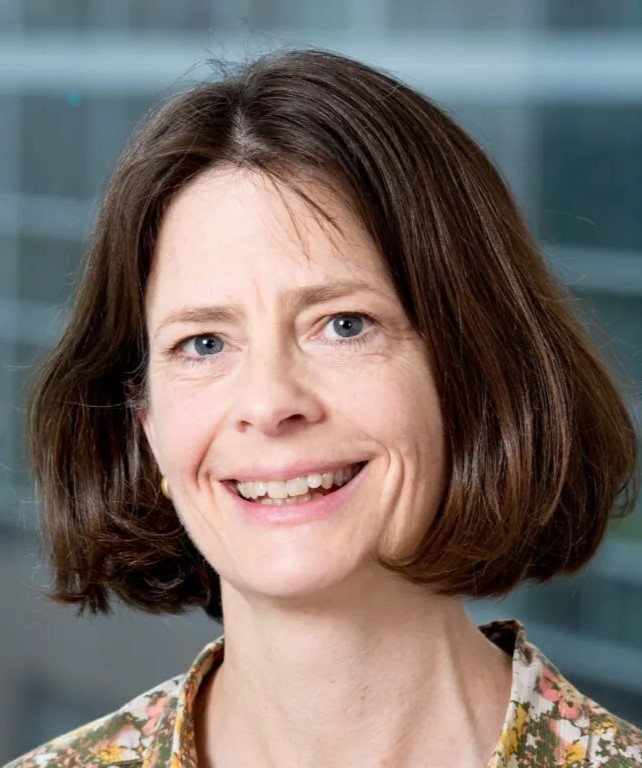
Nobel laureate Mary Brunkow, St. Mary’s Academy class of 1979.
“Listen to your gut, your heart, or wherever you get hit when you think you’re really interested in something.” Mary Brunkow shared that advice with students at St. Mary’s Academy, her alma mater (class of ’79). It’s good advice from anyone, but coming from a Nobel laureate, you might listen extra hard. Now students are more excited than ever about their science studies after the news of Brunkow’s 2025 Nobel Prize for Physiology or Medicine.
Brunkow is currently a molecular biologist at the Institute for Systems Biology in Seattle and shares the Nobel with Fred Ramsdell and Shimon Sakaguchi. The group was collectively awarded for their work discovering a class of immune cells that help to prevent the body from attacking its own tissues, providing fundamental knowledge of how the immune system is regulated. Brunkow called the work “an amazing team effort.”
Since the opening of the SNJM allgirls school in 1859, each generation of St. Mary’s students has been surrounded by supportive women, from the caring faculty and staff who nurture the community to the driven alumni who pioneer new paths. For students in the midst of their STEM (Science, Technology, Engineering and Mathematics) education, Brunkow achieving the highest award in her field is huge news. As the St. Mary’s community celebrated news of Brunkow’s Nobel, senior Tuula remarked, “It goes to show that anyone here can go on to do anything. As someone who wants to go into STEM, it’s really inspiring.”
Brunkow has commended the high school community that helped her cultivate her academic growth, including her teachers Sister Mollie Reavis and Sister Rosemary Anne Parker. She has also acknowledged the role models, career mentors and women in science who gave her “the courage and incentive to persevere.” Now it’s Brunkow’s turn to inspire the next generation. In her Nobel acceptance speech, she shared, “My hope is that I, in turn, can be that role model for my own daughters, as well as for the other young women who are excited about science.”
Nuestra Casa: In the Words of Sister Mary Rita Rohde
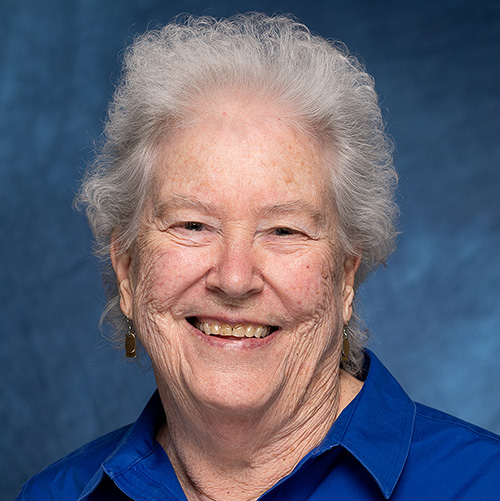
In 2003, Sister Mary Rita Rohde founded Nuestra Casa. Today, through education, advocacy, and mutual support, Nuestra Casa empowers immigrants to create positive changes, enriching themselves, their families and their communities.
“Sister, you are an educator through and through, so you need to do something to educate immigrant women.”

What inspired you to found Nuestra Casa?
In 2002, I returned to the Yakima Valley in Washington State after serving on our Congregational Leadership Team for five years in Longueuil, Quebec. Because I had worked at Heritage University in the Yakima Valley prior to being in Quebec, I knew there were some unmet needs among the diverse population of the Valley. Thus, I interviewed 80 knowledgeable persons (teachers, social workers, church outreach workers, etc.), asking one question, “What is the greatest unmet need among low-income women and children in the lower Yakima Valley?” I shared the results of these interviews with our local Sisters and Associates and invited them to gather and discern to what ministry I was being called. As we discussed the information I had shared, it became obvious that the group of Valley residents who were most underserved and most vulnerable were immigrant women from Latin America. Sister Margaret Downey, the eldest of the seven Sisters present, said, “Sister, you are an educator through and through, so you need to do something to educate immigrant women.” Everyone agreed! Thus birthed the concept of founding a non-profit to educate and empower immigrant women.
“Although Nuestra Casa is an independent non-profit, founding it would not have been possible without the assistance of the Sisters of the Holy Names.”
What were the primary challenges you faced in establishing Nuestra Casa?
It can be daunting to establish a new non-profit, but many knowledgeable colleagues and friends made it possible. I was fortunate to know a competent lawyer who was familiar with doing the paperwork to establish a non-profit organization. It wasn’t difficult to recruit members for a Board of Directors. And of course, money was needed. Because I had learned to raise money for Heritage University, I knew how to raise funds, but I realized that would take time. So, I asked the SNJM Washington Provincial Leadership Team if they would fully fund Nuestra Casa the first year and fund half of the budget the second year, which they agreed to do. Our staff was just me and two half-time employees, and we were able to use the Sunnyside Catholic Church facilities, so our budget was small. Although Nuestra Casa is an independent non-profit, founding it would not have been possible without the assistance of the Sisters of the Holy Names!
Because there were so many needs among the immigrant community, we began immediately to collaborate with other agencies and churches to offer services. We invited a police officer to teach in Spanish what was needed to pass the written portion of the test to get a driver’s license. Our first class enrolled 45 students which was understandable since there is no public transportation in the lower Yakima Valley, and most immigrants need to drive a car to get to their work in the fields and orchards. Along with two police departments we helped hundreds of immigrants get their driver’s licenses! A sampling of collaboration with other groups has included five churches, the local community college and three local public-school districts in offering English classes; clinics and the local hospital doing workshops about health issues; Heritage University teaching GED classes. Individual volunteers have included a young man who taught fitness classes and a man who taught citizenship classes.
“For SNJMs, education is about much more than academics. At Nuestra Casa the full development of the person is evidenced in the large variety of offerings, including celebrations.”
How would you say the SNJM spirit is reflected in Nuestra Casa’s endeavors?
While Nuestra Casa was founded to educate and empower immigrant women, men are also welcome. Hospitality is one of those SNJM values that one feels immediately upon entering the Nuestra Casa building. Immigrants are joyfully greeted and asked how Nuestra Casa can be of help. People may want to enroll in a class or register for an event or have a question about services. If the person needs a service that Nuestra Casa cannot provide, staff assist the inquirer to get in touch with an agency that can be of help.
For SNJMs, education is about much more than academics. At Nuestra Casa the full development of the person is evidenced in the large variety of offerings, including celebrations. A sense of community and belonging is fostered in classes, workshops and events. Care of Earth and the environment is demonstrated through workshops and care to avoid buying anything plastic when possible. Women’s Justice Circles sponsored by IPJC have addressed local and State justice issues with success.
Four SNJM Sisters have been on the Nuestra Casa Board at various times; three Sisters have been on the staff for a few years. SNJM Associates have been involved as an Executive Director, as a staff member, as a Board member, and one is currently a volunteer English teacher. For short periods of time various Sisters and Associates have brought students from Holy Names institutions to volunteer at Nuestra Casa. Our SNJM spirit and values have permeated this ministry.
What are you most proud of regarding this organization?
What makes me most proud is that Nuestra Casa is run by immigrant women. (I am a volunteer English teacher but otherwise have no official role at Nuestra Casa.) The growth and expansion of Nuestra Casa’s services are due to its very competent leadership team who are all immigrant women. Of the eleven regular staff all but one are immigrant women. When the staff become aware of needs in the immigrant community, they act to address those needs and find the funds to do so. One of the most impactful programs they have developed is the all-encompassing Citizenship Program. Three staff have been trained and certified by the U.S. Department of Justice to assist immigrants with the legal work necessary to apply for citizenship, thus saving immigrants the $2,000-$10,000 they would have paid lawyers for this service. This program includes Citizenship classes and individualized assistance for the 60 immigrants who annually complete the arduous process to become U.S. citizens. Annually with all its programs Nuestra Casa serves about 1,500 families from a building it is in the process of purchasing!
For more information, listen to an episode of SNJM’s podcast, “Women on a Mission,” to hear an interview with Sister Mary Rita about the transformative work done by Nuestra Casa.
This article was originally published April 4, 2026, on snjm.org: https://snjm.org/en/blog/2026/04/08/nuestra-casa-in-the-words-of-sister-mary-rita-rohde-snjm/
Interview with Sister Karen Conlin: 45 Years of Teaching at the Holy Names Music Center
SNJM Sister Karen Conlin has dedicated forty-five years to teaching music at the Holy Names Music Center (HNMC). She uses her skill as a music educator and professional cellist to promote peace, dignity, and hope. She occasionally plays the cello with other musicians for weddings, funerals, and other special events. She is currently a member of the U.S.-Ontario Province.
The heritage of the Holy Names Music Center spans more than a century. In 1888, five Sisters of the Holy Names arrived in Spokane from Portland, Oregon, to open an elementary school; piano lessons were already being offered before the end of that first year.
What is special about the HNMC, and what do you like most about it?
The Holy Names Music Center is distinguished by its vibrant, collaborative environment. I deeply value the opportunity to work alongside such a dedicated faculty, where we don’t just share teaching techniques and ideas, but also enjoy a genuine sense of camaraderie through our joint projects.
The Center provides us with dedicated teaching studios and access to the recital hall for performances. Perhaps most significantly, the school manages all billing and financial logistics with families, allowing us to focus entirely on our students. I also find great joy in the variety of our student recitals—ranging from piano and strings to vocal and guitar—and the fact that our facility supports summer camps, group lessons, and rehearsal space for local orchestras.
How are the HNMC’s activities in line with the Sisters of the Holy Names’ mission or educational goals?
Our work is rooted in the legacy of Mother Marie Rose, who founded the community on the conviction that education is a matter of justice and compassion—one that should be accessible to all children, regardless of wealth.
We believe in educating the “whole human person,” which means nurturing the soul and a sense of beauty alongside academic subjects. Our goal is to enrich every student: while some will pursue music as a career, others will find lifelong personal pleasure in playing, and many will become informed, appreciative audience members. To ensure this mission remains inclusive, we offer a generous financial aid scholarship fund that serves as a cornerstone of our community.
What difference can such an organization make in a society?
The Holy Names Music Center serves as a pillar of stability; our long-term presence in the Spokane area is a testament to our commitment to the community. By offering music education in a wide array of instruments and styles—through both private and group instruction—we provide a vital cultural and educational resource that enriches the lives of local residents.
What are your hopes for the future of the HNM Center?
My primary hope is to secure the long-term sustainability of the Center. This support will allow us to better invest in our dedicated faculty and ensure our facilities remain a high-quality environment for learning, preserving our status as a premier space for musical growth for years to come.
Learn more about the Holy Names Music Center at hnmc.org.
Originally published Feb. 20, 2026, on snjm.org: https://snjm.org/en/blog/2026/02/20/interview-with-sister-karen-conlin-45-years-of-teaching-at-the-holy-names-music-center/
Interview with Sister Joanne Pundyk: A Legacy of Service in Brazil
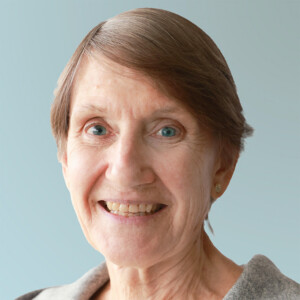 Sister Joanne Pundyk, SNJM, has been serving in Brazil since 1987, where she is one of five SNJM Sisters who founded the Centro Social Madre Maria Rosa. Located in the city of Maceió, the center serves the community by offering educational and recreational programs for children and adolescents (ages 7–14), artisanry classes and adult literacy initiatives.
The center’s mission is to empower those in vulnerable situations through comprehensive development, active solidarity, and advocacy aimed at transforming unjust systems to ensure human dignity. This mission also encompasses supporting people affected by human trafficking, a critical issue in the region.
From a Brazilian perspective, how would you describe the current landscape of human trafficking?
The issue of human trafficking continues to be a massive problem that undermines the human and spiritual values of the Brazilian people. It occurs on local, national and international levels. It is directly related to impoverishment, a lack of gender equality and a complete disregard for human dignity. A significant percentage of the persons caught in the web of human trafficking come from the northern and northeastern regions of the country—regions which have the highest number of people living in vulnerable conditions. On the positive side, there is a national plan by the federal government, now in its fourth edition, to combat human trafficking and involve the population in reporting violations. Networks, such as Rede Um Grito Pela Vida, are directly involved in the struggle to eliminate this evil.
Regarding the efforts to address human trafficking, what do you consider to be the primary achievement of Centro Social Madre Maria Rosa?
The Centro Social Madre Maria Rosa—located in the city of Maceió on the northeastern coast of Brazil, which receives nearly a million tourists per year—is a safe harbor for children, adolescents and women living on the periphery of the city. In terms of human trafficking, we have been able to raise awareness regarding what it is, how it happens, its consequences and our responsibility to report suspected cases. Education is a vital element of prevention, and prevention saves lives.
What has been your greatest source of satisfaction after all these years dedicated to helping young people? What drives you to pursue your mission in Brazil?
I am happy that, as a team of dedicated people, we have provided a safe place for children, women and their families to value their human dignity, develop their talents and assume their roles in their community. People know that we are there for them, and so they become “multipliers” of what they have learned at our center. I continue to live out my mission in Brazil because I am called to do so; it is a vocation. I experience much happiness and peace in being part of a group of people who are signs of hope among the challenges and adverse situations of our reality. The love and resilience of Mother Marie Rose is a constant inspiration for me.
Originally published March 24, 2026, on snjm.org: https://snjm.org/en/blog/2026/03/24/interview-with-sister-joanne-pundyk-a-legacy-of-service-in-brazil/
Interview with La rue des Femmes on Women’s Homelessness
In Canada, nearly 1,700,000 people[i] have reported experiencing homelessness at some point in their lives. In the province of Québec, approximately 330,000 people[ii] have gone through homelessness. Among them, 37,400 women have experienced visible homelessness, meaning they had to live on the street, in a park, a car, or a makeshift shelter.
Recently, La Presse reported that in 2025, “seven emergency shelters for homeless women in Montréal,” Québec’s largest city, “recorded more than 41,000 refusals for accommodation due to lack of space.”
In this context, an organization like La rue des Femmes, which “provides curative and preventive relational health care to women experiencing or at risk of homelessness,” is essential.
The Deputy Executive Director of La rue des Femmes, Louise Waridel, answered our questions to shed light on the urgent issue of women’s homelessness. It is worth noting that this organization is part of the collaborative ministries of the Sisters of the Holy Names of Jesus and Mary.
Have you noticed improvements or increased vulnerability in women’s living conditions over the past few years?
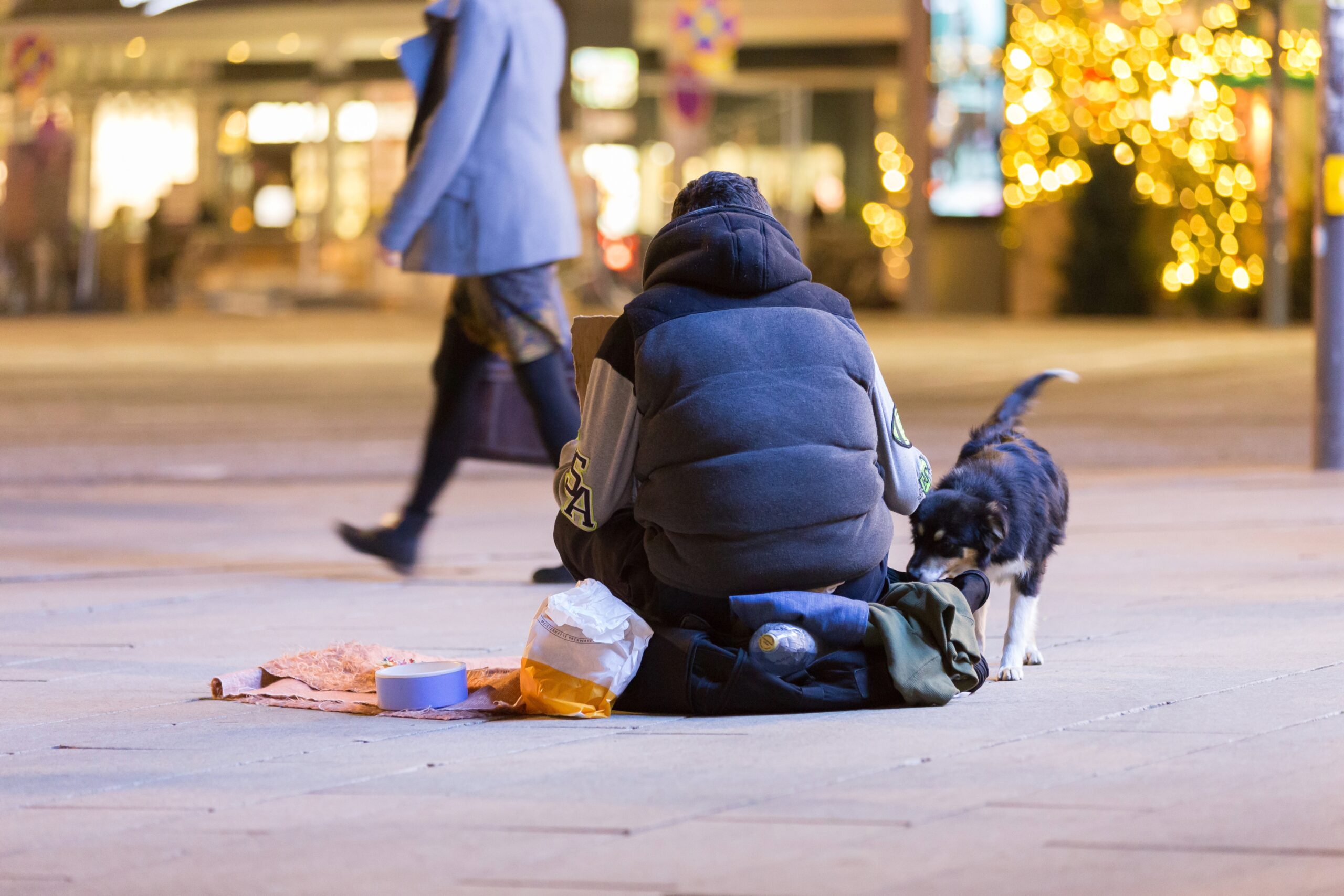
I have been working in the field of homelessness and living in Montréal for the last 20 years. It is undeniable: we are seeing a dramatic increase in the number of people experiencing homelessness and a significant deterioration of women’s conditions. Their reality has become more complex, more intense, and, in many cases, more difficult.
However, it would be unfair to say that no progress has been made. There is greater public recognition of the realities faced by women experiencing homelessness, more research on the subject, and more discussion of trauma-informed approaches.
Nevertheless, on the ground, needs are growing faster than resources. Teams are exhausted, waiting lists are getting longer, and structural solutions are slow to materialize. When resources are scarce, people in precarious situations tend to be forgotten, and we lose sight of our intention to be a community grounded in values of hospitality, democracy, and openness to the world.
In times of crisis, those who most quickly find themselves in situations of precarity and adversity—those who endure the most difficult circumstances—are women, racialized people, Indigenous people, people of diverse gender identities, and those who are physically, psychologically, or relationally vulnerable.
Why do we speak of the “invisibility” of homelessness among women?
We speak of invisible homelessness among women because their reality often does not fit the public image of homelessness. When we imagine a homeless person, we often think of someone sleeping on the street, visible in public spaces. For many women, this is not the case; they experience what is known as “hidden” or “invisible” homelessness.
Rather than sleeping outside, some women choose to stay on the sofa of a relative, an acquaintance, or a partner, often accepting precarious arrangements to avoid the streets. They may stay temporarily with someone in exchange for domestic services, financial contributions, or, sometimes, under pressure. This arrangement allows them to avoid some of the immediate dangers of the street, but it creates unequal power dynamics that lead to exploitation.
Women also develop protection strategies to avoid being identified as “homeless.” They may make great efforts to maintain a neat appearance, hold on to a job, or stay active in they community to hide their housing instability. This ability to adapt contributes to their invisibility. Fear of violence also plays a central role in these strategies.
Why are homeless women more likely to experience violence?
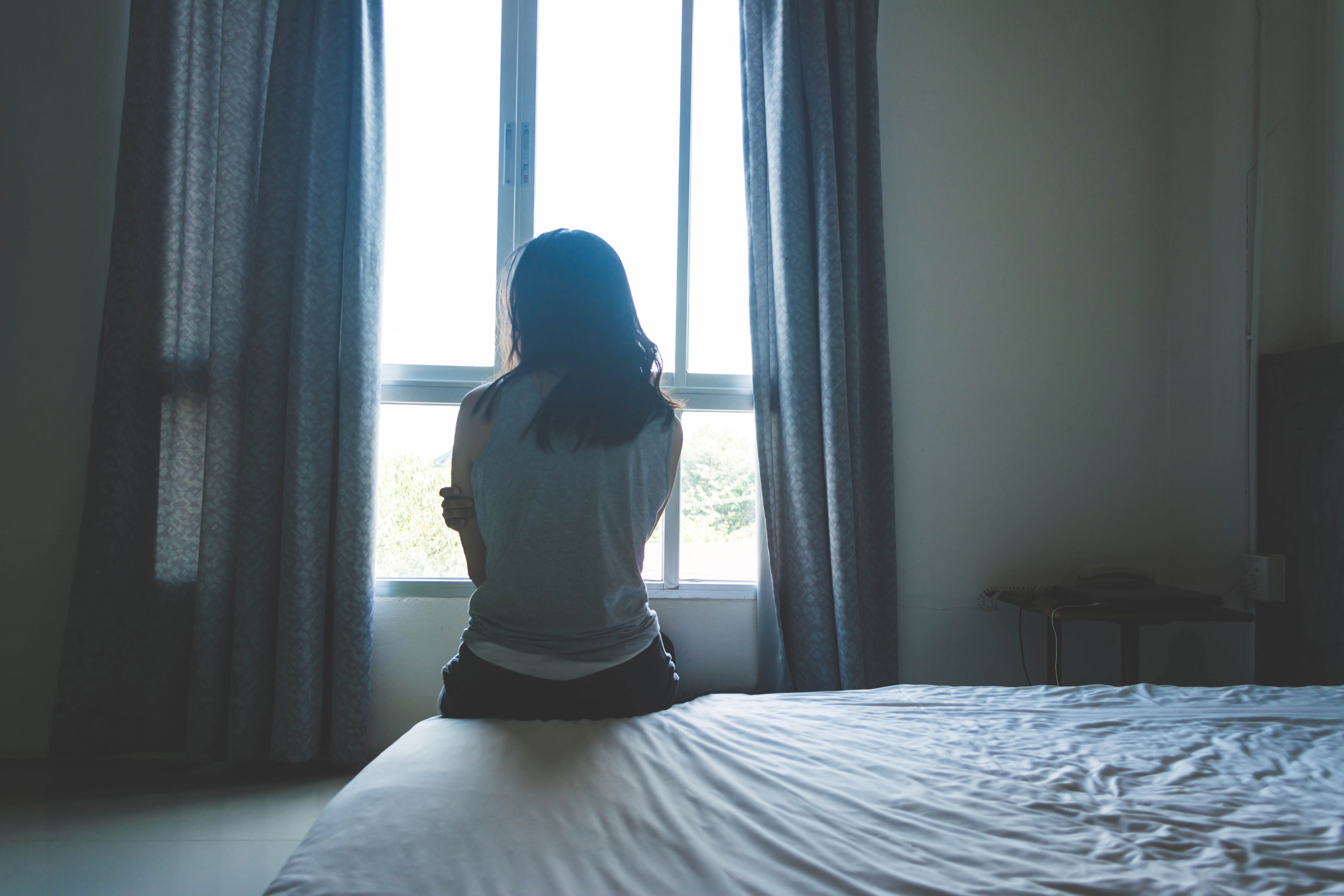
Women experiencing homelessness live in an environment marked by instability, insecurity, and various forms of violence (physical, psychological, sexual, economic, and systemic). In a context where resources are limited and everyone is struggling to meet basic needs—food, housing, safety—tensions can quickly escalate into violence.
Living on the street therefore becomes a daily struggle for survival.
Substance use is also an aggravating factor. The cycle of addiction, combined with lack of sleep, malnutrition, and constant stress, can alter judgment and increase impulsive behaviors—both in the women themselves and in those around them. Situations involving the purchase, sale, or exchange of substances particularly expose women to exploitation, coercion, and assault.
Women are also often perceived as physically vulnerable, which can make them prime targets for aggressors. Some may be forced to exchange sexual services for a place to sleep, food, or protection, placing them in deeply unequal power dynamics.
Systemic violence further compounds these challenges. Social, judicial, and medical institutions are not always well adapted to the realities of homeless women. They may encounter judgment, stigma, or a lack of understanding. Prejudices suggesting they are responsible for their situation, or that they are unstable, or not credible, further marginalize them and limit their access to protection and support.
In short, women experiencing homelessness are more exposed to violence due to a complex web of individual, social, and structural factors. Their vulnerability is not a personal weakness, but rather a result of a context shaped by gender inequality, cumulative trauma, and insufficient protection.
Why is it so difficult for these women to obtain housing?
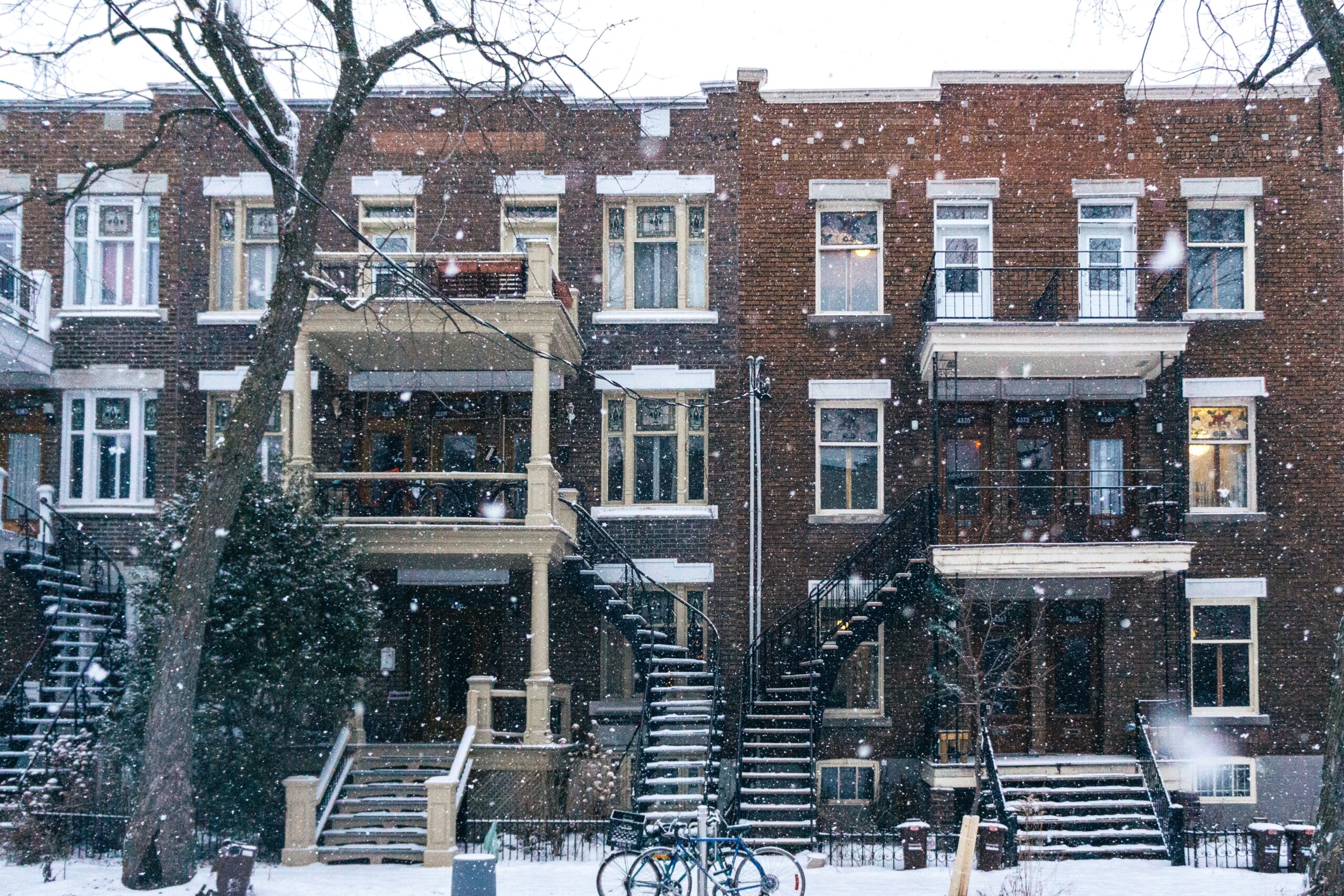
The current situation is complex. The shortage of affordable housing, rising rents, and high demand place landlords in a position of power, allowing them to be much more selective when choosing tenants. In this context, women receiving social assistance, those without stable employment, or those without recent landlord references are often excluded. Prejudices related to homelessness, mental health, or substance use further reinforce this exclusion.
Paradoxically, when we talk about homelessness, the greatest challenge is not only finding housing, but keeping it. If we skip essential steps, we risk setting homeless people up for failure again, and making them even more vulnerable.
When a person’s health has deteriorated to the point where going outside, cooking, or taking care of personal hygiene feels like an impossible task, maintaining housing is extremely difficult. When past traumas make the darkness of the night, noises, and the loneliness of an apartment feel terrifying, it only takes a few weeks for a person to return to the street.
Almost all the women who come to La rue des Femmes have experienced trauma in the face of dehumanizing structures and systems. As a result, they have lost trust in themselves and in others. This is why, at La rue des Femmes, we speak of relational health—the capacity to be in connection with oneself and with others. When something inside has been broken, time is needed for healing before a person can begin rebuilding her life.
That is why the solution cannot be limited to simply obtaining housing. First, we must offer a safe environment where healing can begin. We need spaces where trauma is recognized, where support is continuous, and where women can reflect on the type of environment that would truly suit them.
Sustainable housing is built through listening, psychosocial support, and the gradual rebuilding of autonomy. Sometimes, the answers women give regarding about their needs do not fit the traditional models we imagine—which challenges us to rethink our approaches and adapt our solutions.
[i] Statistics Canada, 2023
[ii] Government of Québec, 2021
Originally published Feb. 27, 2026, on snjm.org: https://snjm.org/en/blog/2026/02/27/la-rue-des-femmes-womens-homelessness/