
spacer
spacer
Our Blog: Holy Names Voices
Cultivating the Global Sisterhood
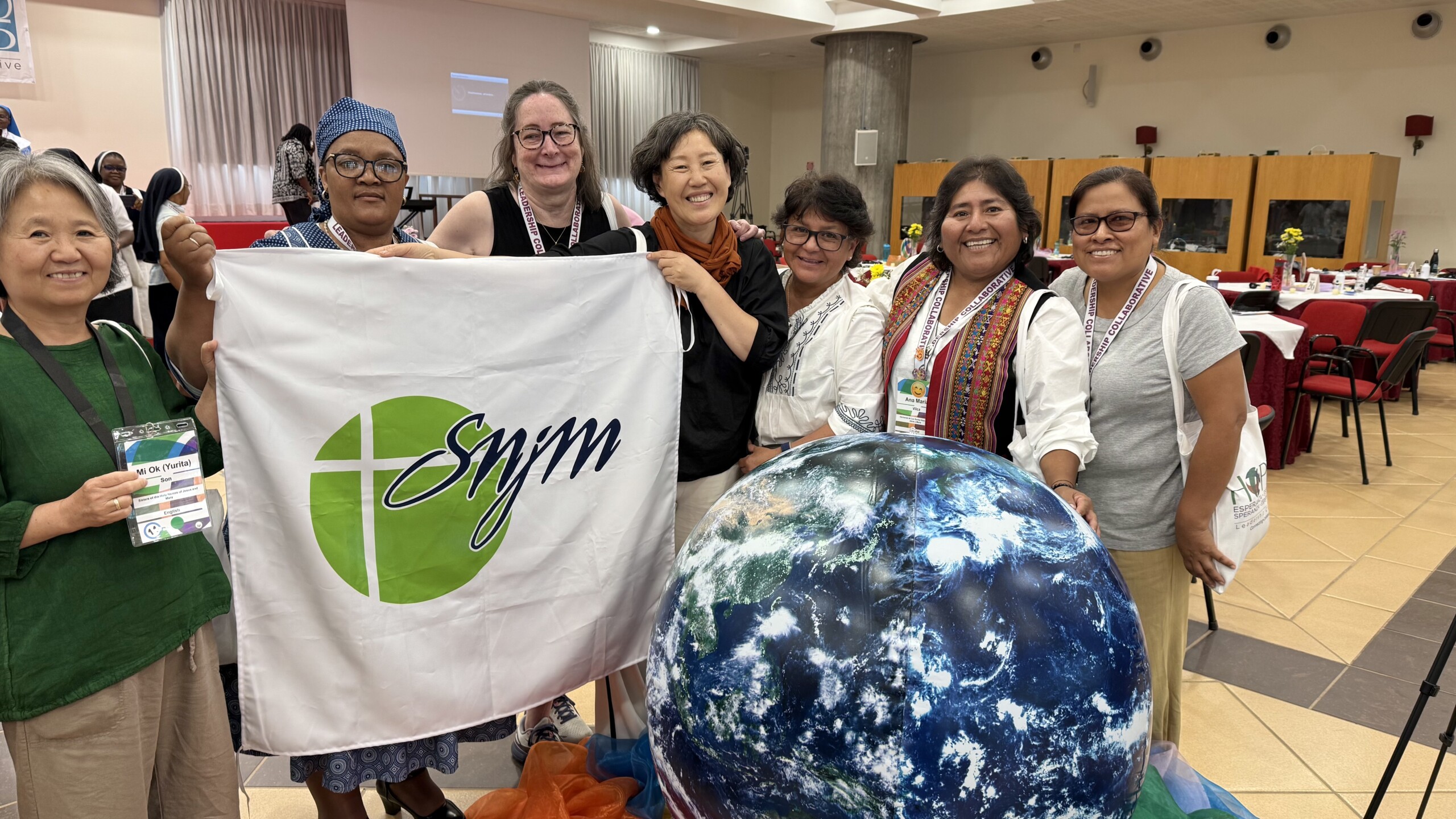
SNJM Sisters from Peru, Lesotho and the U.S. attend the Hope 2025 conference in Rome.
Sisters reach beyond congregational boundaries to strengthen communal spirituality.
“Unite us in our global sisterhood as we lead ourselves and one another with compassion while inspiring hope in the world,” proclaims the blessing prayer for the Hope 2025 retreat in Rome. SNJM Sisters from Peru, Lesotho and the U.S. joined over two hundred women religious under the age of 65 to discuss the future of religious life and the role of women as leaders in the church.
Hope 2025 was hosted by the Leadership Collaborative (LC), an organization formed in 2012 to foster transformational leadership for religious life. To advance the growth of the global religious community, LC empowered women religious to connect across cultural boundaries at the weeklong gathering in June. “Something new was being breathed into life,” said LC’s Associate Director Tammy Townsend.

Sisters from 45 countries joined together in conversation and prayer. “When we from different countries met, it was more than simple joy,” said Sister Sophia Park. The group found solidarity through their commitment to follow Jesus, live the gospel values and serve people on the margins. From that communal commitment burst a sharing of experiences of joy, challenge, loss and support.
Sister Lourdes Quintana Cortavitarte was energized by groups discussing changes in their communities and models of leadership through uncertain times. “I saw new generations very open to the challenges that may arise, to the vision of a freer development of humanity.” Across congregations, Sisters shared their processes for embracing the evolving realities of religious life, for letting go of what is ending, for cultivating hope.
By the end of the week, unified by their common mission and strengthened by their diverse experiences, each Sister was prepared to return to their local community and share knowledge from the emerging global sisterhood. As Hope 2025 ended, Sister Michelle Garlinski reflected, “The world is calling for action, and religious women will continue to respond as those who have gone before us.”
Book Corner
Sharing SNJM Spirituality through Published Works
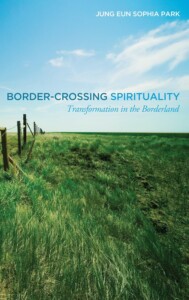 Border-Crossing Spirituality
Sophia Park, SNJM
Almost every religious tradition has within it a spiritual teaching on “being in between” and the transformation that occurs in the borderland. Sister Sophia Park explores the values of hospitality, friendship and present awareness that accompany people who cross cultural, geopolitical and existential borders.
Border-Crossing Spirituality
Sophia Park, SNJM
Almost every religious tradition has within it a spiritual teaching on “being in between” and the transformation that occurs in the borderland. Sister Sophia Park explores the values of hospitality, friendship and present awareness that accompany people who cross cultural, geopolitical and existential borders.
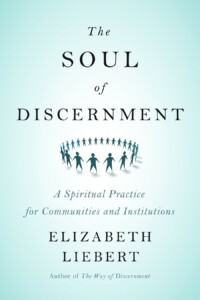 The Soul of Discernment
Elizabeth Liebert, SNJM
“Discernment may very well be the single most important Christian spiritual practice for dealing with the complexity of our contemporary lives,” writes Sister Elizabeth Liebert in The Soul of Discernment. For leaders seeking to contribute to the collective future of our communities, Sister Elizabeth’s book is a guide through the Social Discernment Cycle, a collaborative process for groups seeking God’s call in decision making.
The Soul of Discernment
Elizabeth Liebert, SNJM
“Discernment may very well be the single most important Christian spiritual practice for dealing with the complexity of our contemporary lives,” writes Sister Elizabeth Liebert in The Soul of Discernment. For leaders seeking to contribute to the collective future of our communities, Sister Elizabeth’s book is a guide through the Social Discernment Cycle, a collaborative process for groups seeking God’s call in decision making.
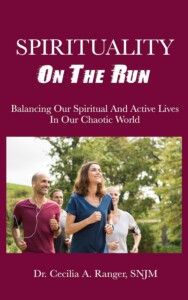 Spirituality On The Run
Cecilia Ranger, SNJM
Sister Cecilia Ranger has played the lifelong chess game of balancing her spiritual and active lives. “Our fascinating but chaotic world offers us the enormous challenge of creating a rhythm in our lives, a life-enhancing harmony between action and contemplation.” In Spirituality On The Run, she explores how we can live the rhythm of a balanced life.
Spirituality On The Run
Cecilia Ranger, SNJM
Sister Cecilia Ranger has played the lifelong chess game of balancing her spiritual and active lives. “Our fascinating but chaotic world offers us the enormous challenge of creating a rhythm in our lives, a life-enhancing harmony between action and contemplation.” In Spirituality On The Run, she explores how we can live the rhythm of a balanced life.Living Our Spirituality
“From our charism flows a spirituality that is the wellspring of our life…”
-SNJM General Chapter Acts, 2016
Across our congregation, Sisters and Associates shared their personal reflections on the meaning of spirituality. Their words reveal a way of living that is embodied, creative and grounded in the presence of a loving God.
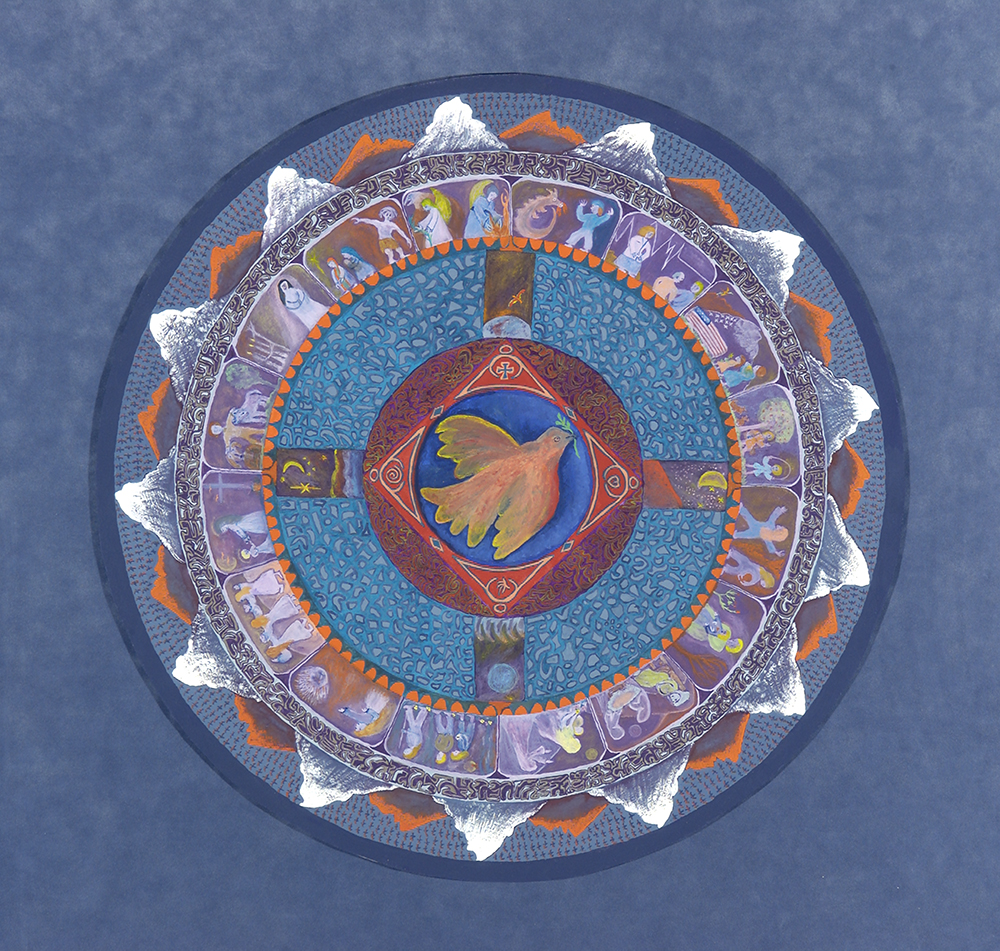
Mandala by Judith Mayer, SNJM
Contemplative Creativity
Art becomes a form of prayer when it inspires stillness, imagination and a sense of wonder. In these pages, we share works by SNJM Sisters that invite reflection, meditation, hope and joy.
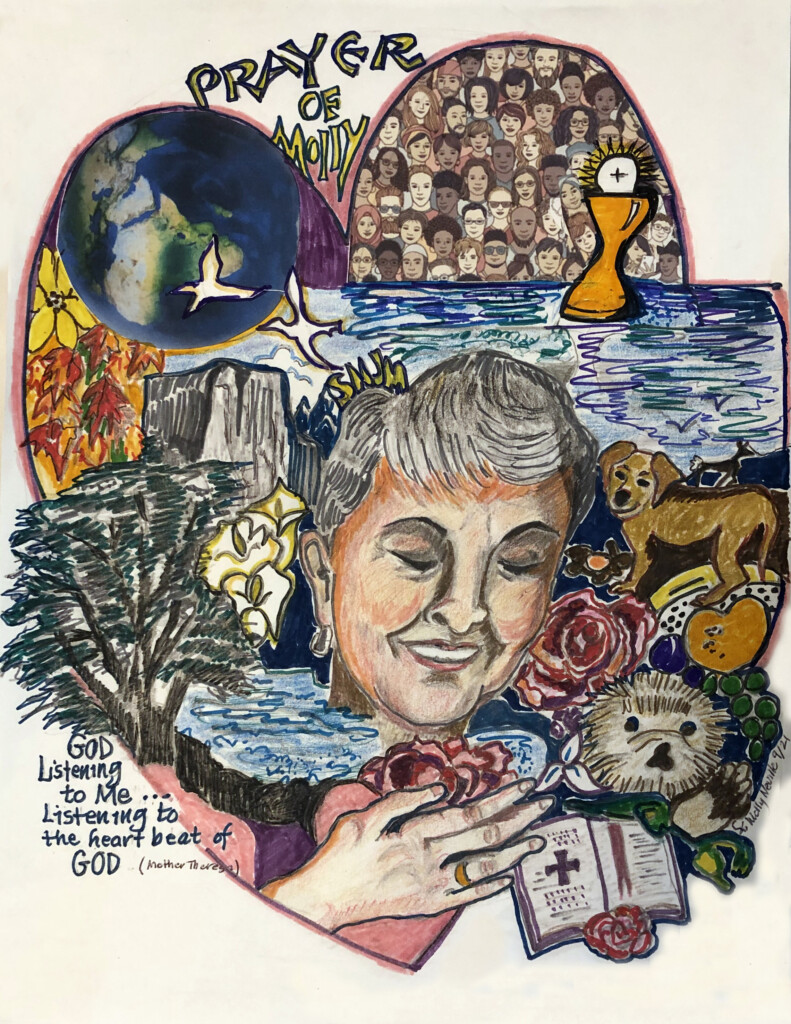
“Prayer of Molly” by Molly Neville, SNJM
Practices of Prayer and Presence
Our spiritual practices show how prayer and mindfulness are intentionally woven into daily life, offering quiet, continual connection to each moment.
Sister Beth Liebert: The Ignatian practice of entering imaginatively into a Scripture text and letting the Spirit take over in my imagination has made Jesus come alive to me as a real person I can converse with at any time. I also use the Ignatian Rules for Discernment of Spirits to make thoughtful, Spirit-led decisions. Through my teaching I have tried to demystify these resources so others may experience their own personal relationship with Jesus as the ground of their lives.
Sister Fran Kearney: Whenever I am writing, I begin with JMJ (Jesus, Mary and Joseph) at the top of the page, invoking the Divine to guide my thoughts and words. It may be a to-do list, a shopping list or notes from a meeting. I depend on the Spirit to help my words in letters and notes be thoughtful, sensitive and supportive of the recipient.
Sister JoJean Cavalli: Using the Orthodox practice of our “Desert Fathers,” an interior recitation of The Jesus Prayer: Jesus, Son of the Living God have mercy on me, a sinner, helps center me in the present moment. This practice resonates with one’s breathing, and I like to think the Holy Spirit continues the prayer in me, even as I fall asleep.
Routines That Root Us
Familiar habits, daily rhythms and long loved prayers are touchstones throughout our days. These simple, faithful practices become anchors for presence, peace and spiritual connection.
Sister Peggy Kinzie: Humming a simple mantra like “Be Still and know I am God” or “Jesus, I know you are near,” can help quiet an active mind and body.
SNJM Associate Helen Janisse: A meaningful part of my spiritual life is living each day with a special scripture passage, phrase, or word, often drawn from a daily reflection.
Melodies of Grace
Through rhythm, harmony and silence, music is a living prayer, woven into worship, reflection and the flow of daily life. Music offers moments of grace throughout our days.
Sister Linda Riggers: All my life, music has fed my spirit. Listening to music, playing music, brings the details of everyday life into a new light, helping me spot where the Divine rests in my surroundings.
Sister Claire Durocher: As I drive, I often find myself thanking God for the gift of still being able to do so and turning street names into moments of prayer like singing “Shepherd Me, O God” when I pass Shepherd Street.
Sister Janet Walton: When singing or making music on the piano, I create moments for myself of courage, of resilience, of joy. When I listen to music, I know what beauty is, that hope is real. I know, within and without, that God is more, one note after another.
Words That Hold Wonder
Spirituality often resides in our deepest questions and moments of awe. Through poetry and reflection, we are called to observe and ponder.
Hope is Rising – Mary Lyons, SNJM
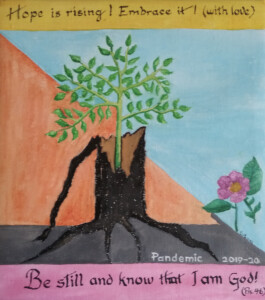
“Hope Is Rising” by Mary Lyons, SNJM.
The focal point of this image is the charred remains of an innocent victim of a forest fire portrayed in Black.
Beneath the tree is a band of Grey, a symbol of serious depression which can quickly descend over people who experience total helplessness.
A triangle of Orange symbolizes anxiety/not hopelessness.
A blue triangle is a shower of calm which encourages a sense of Hope.
Hope is quickly discovered in the green of New Birth rising from charred remains.
The flower, a flicker of Joy, which hopes to survive but is unstable and cannot yet find her rootedness.
The band of yellow is total Joy which recognizes the gift of Hope.
The band of pink is an ecstatic awareness of the universal presence of our God of Love and of Mercy who is here for all of creation.
In all these ways, we live out a vibrant spirituality. Sister Joan Saalfeld writes, “Individual spiritual transformation is usually a quiet and gradual process. It is the fruit of openness to what happens as we try to live our lives with integrity and intention. It is not so much something we do, as something we receive when we are faithful to our journey into the mystery of God, doing our best to make each life transition as it comes to us.” This is our call, to be rooted, open and ever attuned to the Love that holds all things.
Holy Thursday Lessons from the Redwood Trees – Miriam Malone, SNJM
No one of us stands alone
We stand straight and tall
and we bend with the wind
What we know for sure
is this
the fog will lift and it is fog
that we need to live well
and fully
as we reach heights never
imagined and our roots
stay firmly grounded in
the earth
Look up and see
we can almost touch the sun!
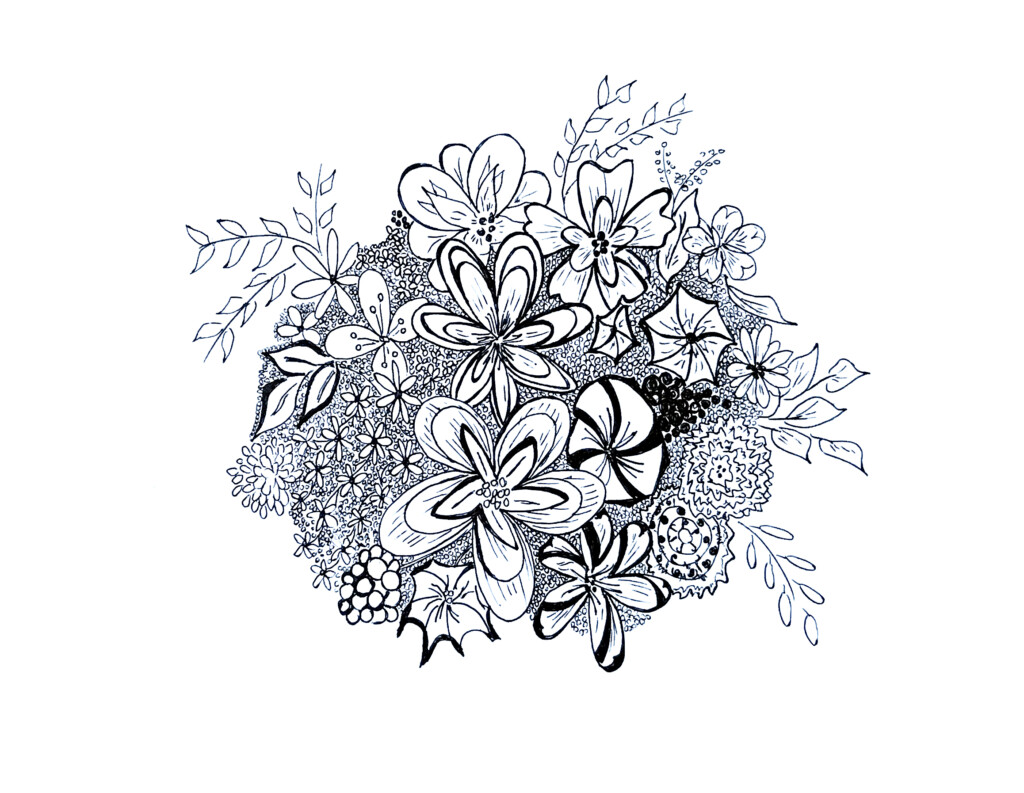
“Meditation Drawing” by Maria Faina, SNJM
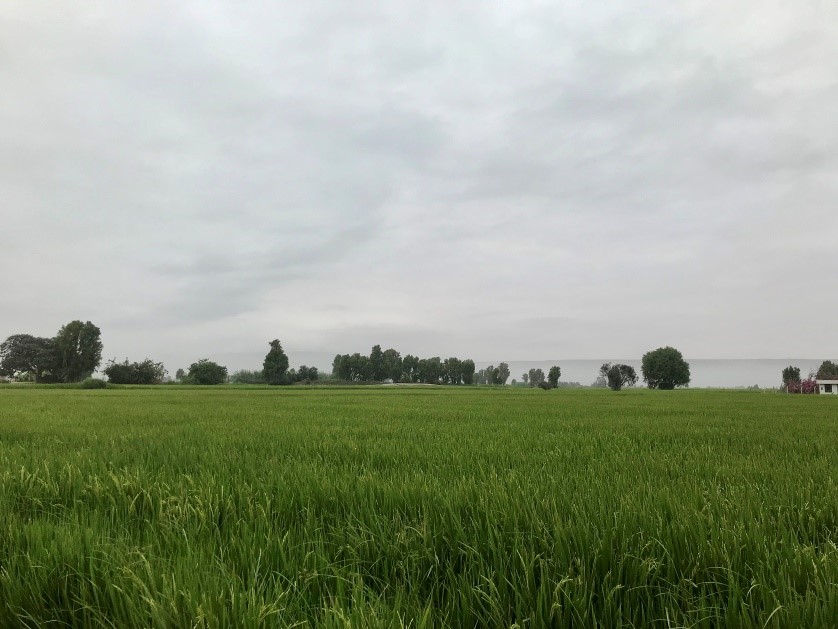
“El color de la Esperanza” (The color of hope), photograph by Ana Maria Vilca Mamani, SNJM.
Catholic Sisters Week – Travel Lessons
We collect experiences throughout our lives that shape who we are and how we act in the world. For Catholic Sisters Week, we’re sharing how some of our recent travel experiences have shaped us.
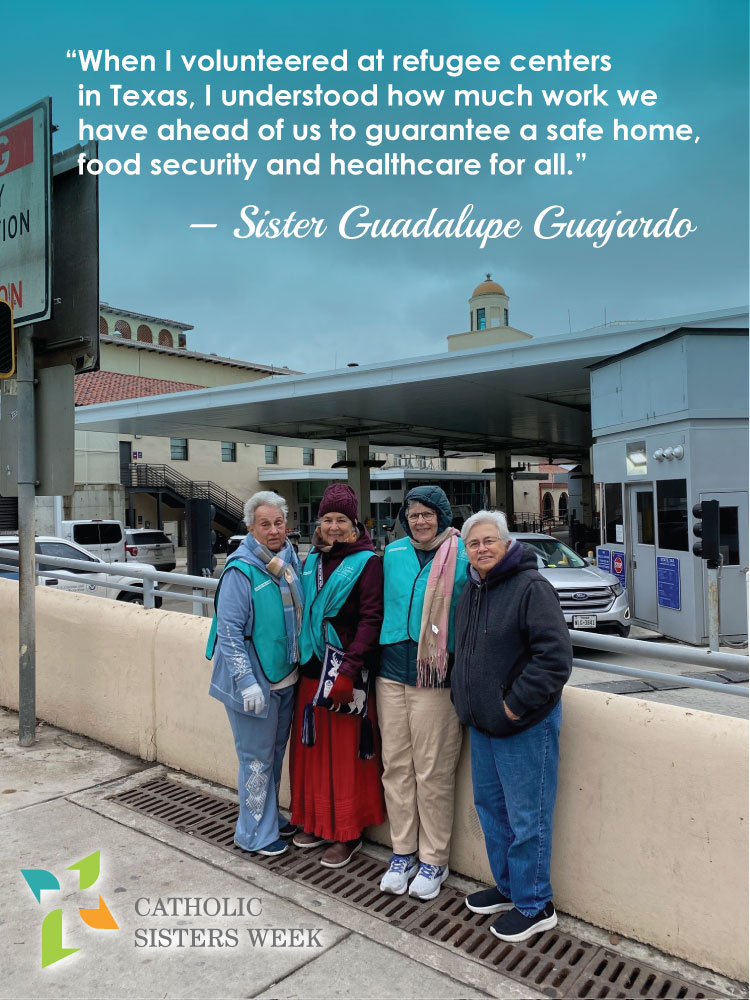
“When I volunteered at refugee centers in Texas, I understood how much work we have ahead of us to guarantee a safe home, food security and healthcare for all.” – Sister Guadalupe Guajardo
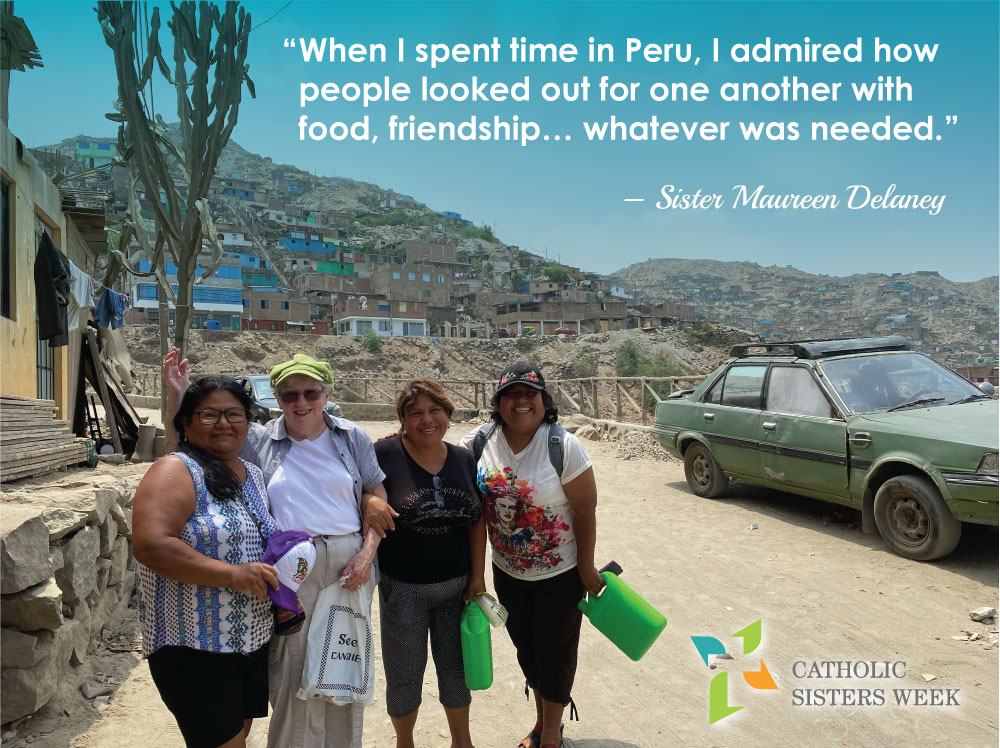
“When I spent time in Peru, I admired how people looked out for one another with food, friendship… whatever was needed.” – Sister Maureen Delaney
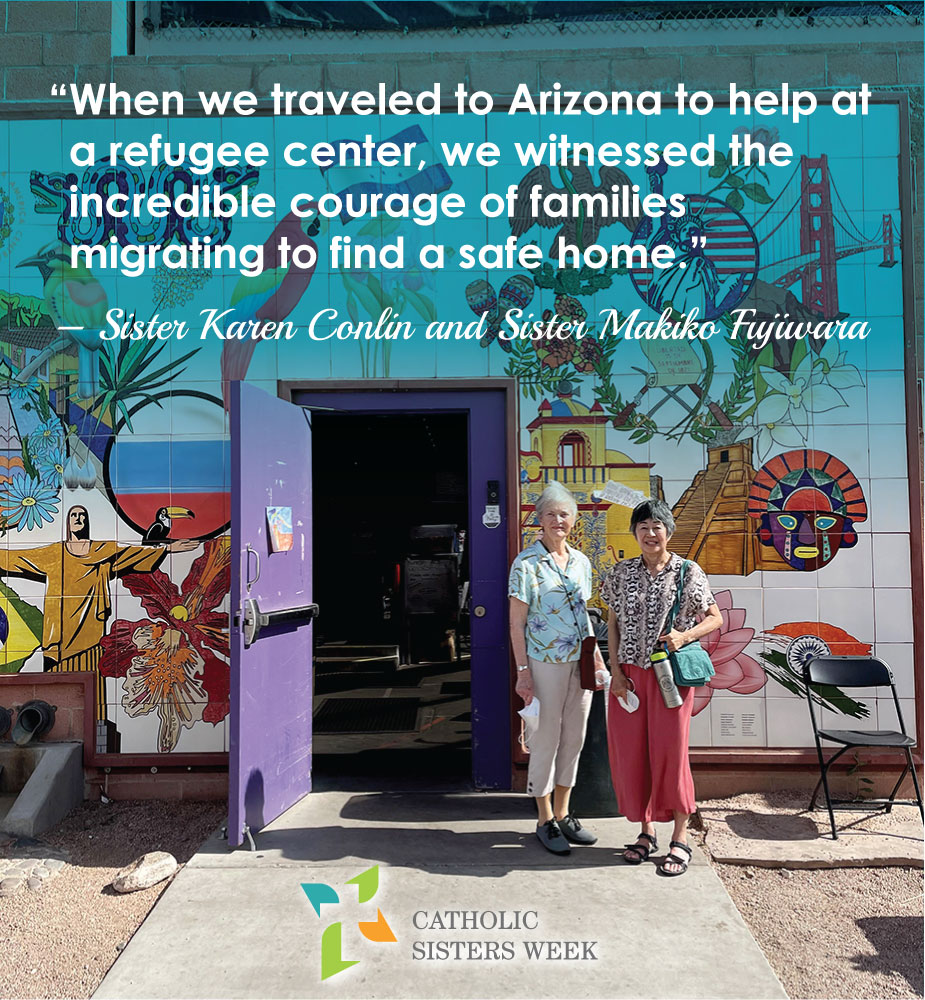
“When we traveled to Arizona to help at a refugee center, we witnessed the incredible courage of families migrating to find a safe home.” – Sister Karen Conlin and Sister Makiko Fujiwara
Holy Names History – Christmas Poetry
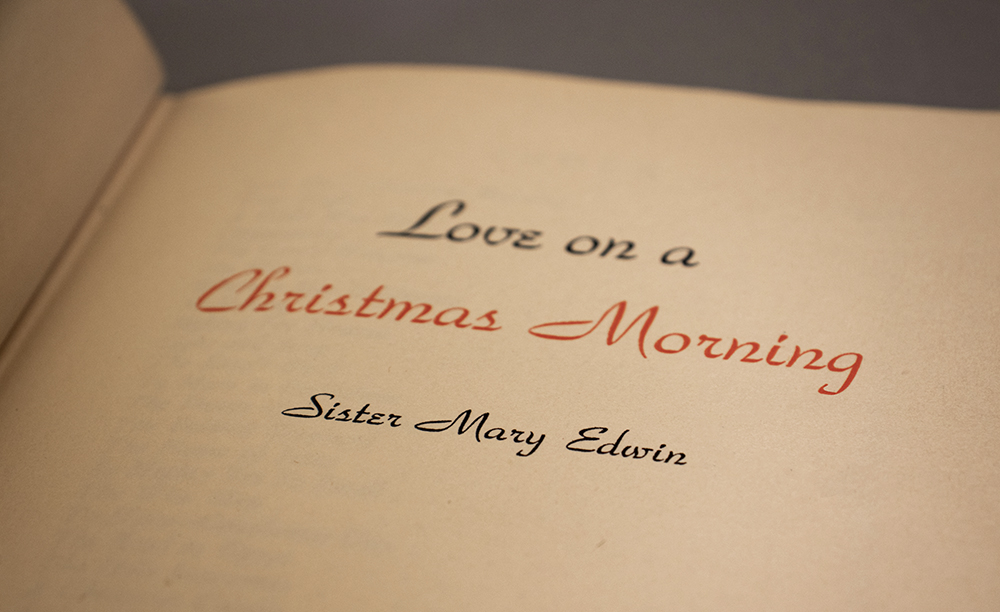
Many Holy Names Sisters composed poetry, including California Sister Mary Edwin O’Neill (1867-1946), who published “Love on a Christmas Morning,” a charming book of poems relating to Christmas, in 1938.
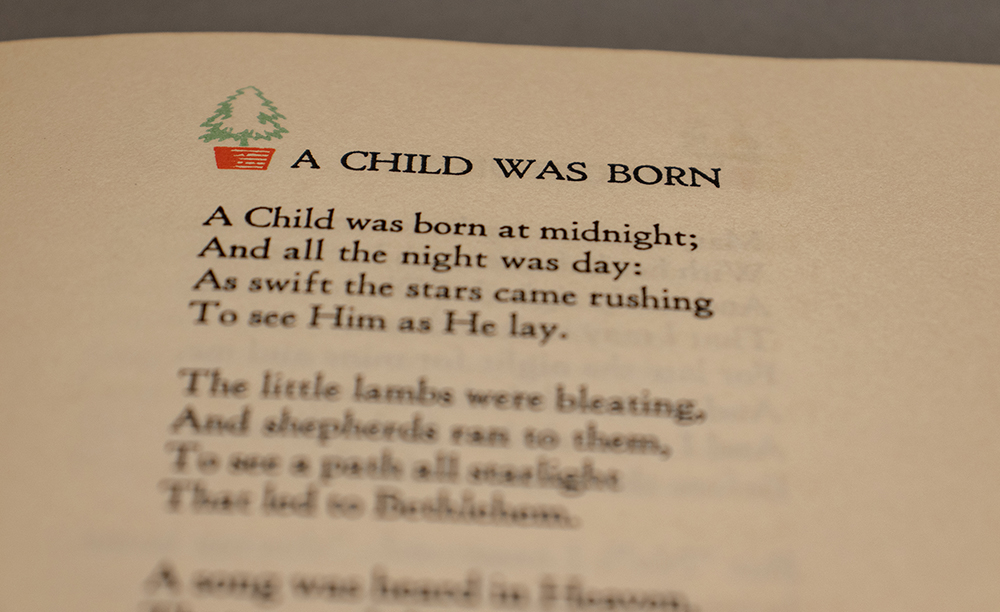
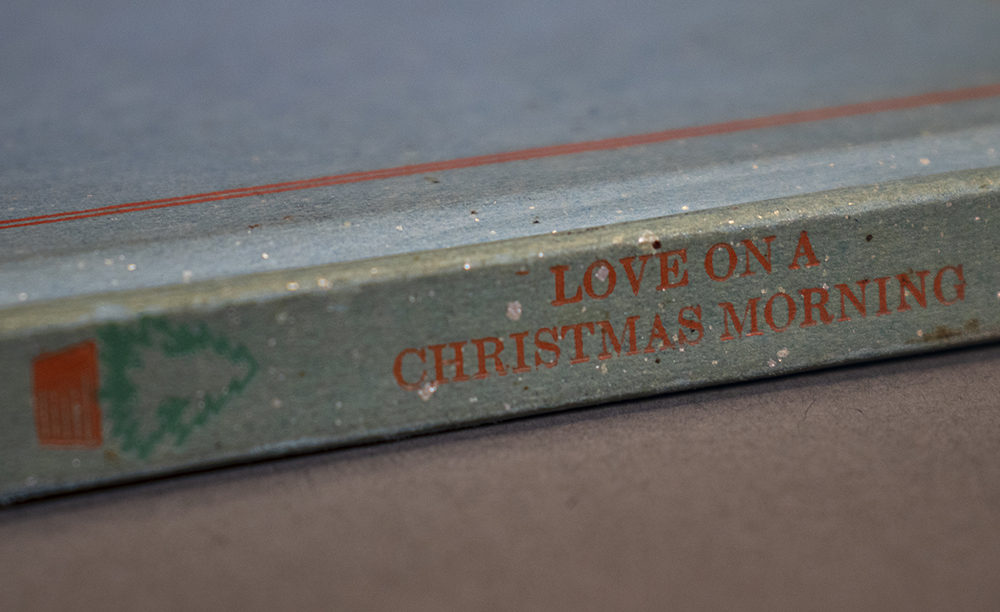
Photos courtesy of SNJM U.S.-Ontario Archives.
We’re sharing objects from the Archives of the Sisters of the Holy Names of Jesus and Mary. The Archives catalogues historical records, objects and publications in order to preserve the history of our institution, schools and ministries.
Holy Names History – A Gift from Bing Crosby
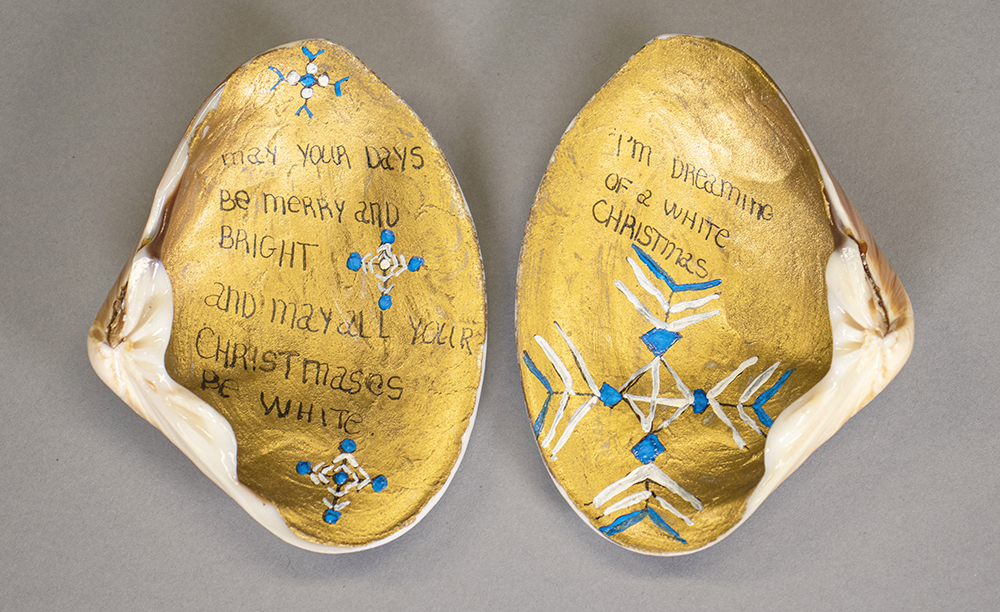
Holy Names Sisters received homemade gifts from Bing Crosby!? Yes, it’s true.
Here is a shell, painted and decorated for Christmas. The accompanying Christmas card reads, “Crafted at Casa Crosby by loving, if reluctant, hands,” signed by singer Bing Crosby and his wife Kathryn. Bing grew up attending St. Aloysius Parish in Spokane, Washington, which was staffed by Holy Names Sisters. Many future Sisters also grew up in that parish and crossed paths with the Crosby family over the years, including Sister Katherine Theresa Fife, to whom this shell was sent in the early 1970s.
Photo courtesy of SNJM U.S.-Ontario Archives.
We’re sharing objects from the Archives of the Sisters of the Holy Names of Jesus and Mary. The Archives catalogues historical records, objects and publications in order to preserve the history of our institution, schools and ministries.
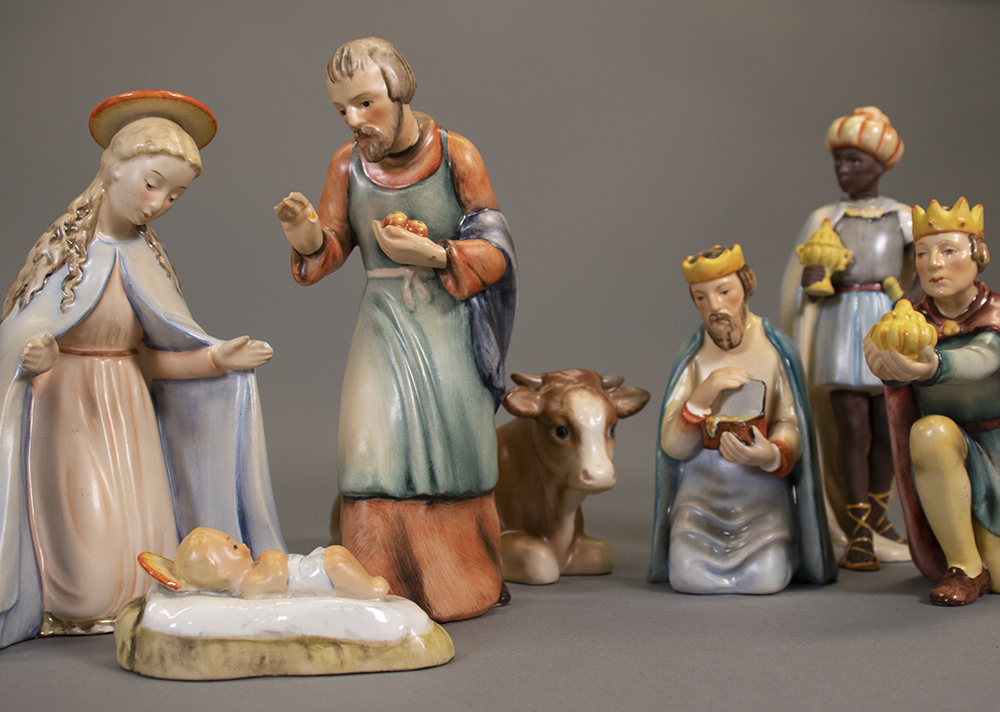
Holy Names History – Nativity Scene
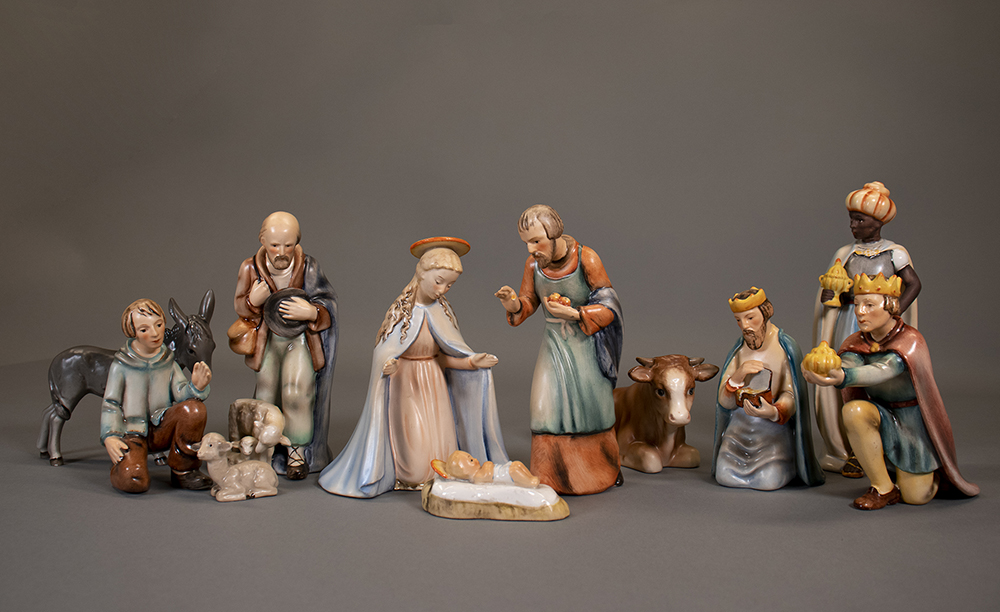
“For to us a child is born, to us a son is given,” (Isaiah 9:6). This creche scene was displayed at Ramona Convent Secondary School in Alhambra, California for many years.
Photos courtesy of SNJM U.S.-Ontario Archives.
We’re sharing objects from the Archives of the Sisters of the Holy Names of Jesus and Mary. The Archives catalogues historical records, objects and publications in order to preserve the history of our institution, schools and ministries.
Holy Names History – Journey to Bethlehem
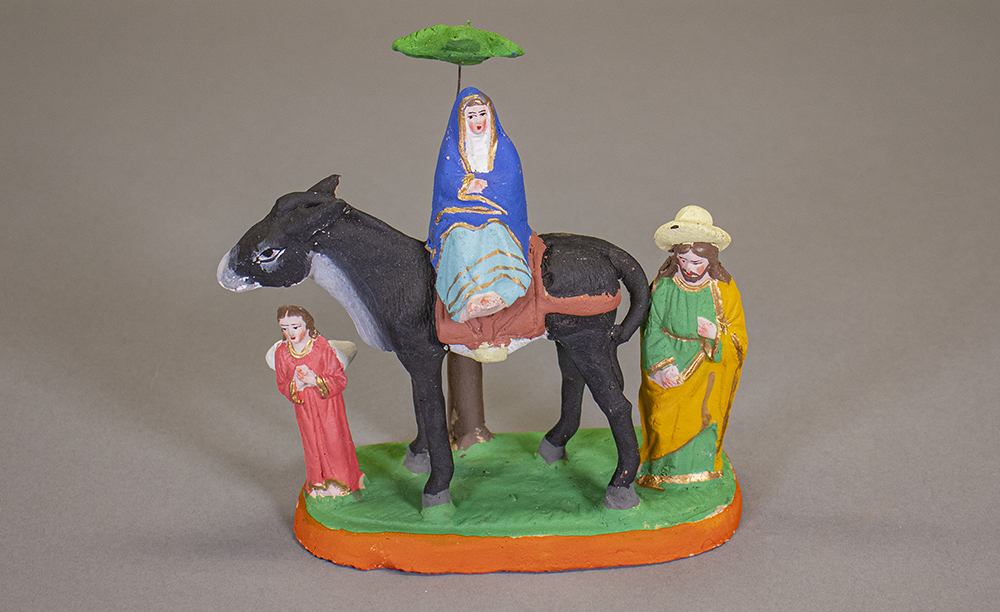
Sisters often bring home souvenirs from their missions around the world. This folk art depiction of Joseph and Mary’s journey to Bethlehem was purchased in Mexico in 1962 and belonged to Oregon Sister Barbara Gfeller.
Photo courtesy of SNJM U.S.-Ontario Archives.
We’re sharing objects from the Archives of the Sisters of the Holy Names of Jesus and Mary. The Archives catalogues historical records, objects and publications in order to preserve the history of our institution, schools and ministries.
Beauty in Our World: Sister Mary Noreen O’Leary

Sister Mary Noreen O’Leary in the studio.
As we celebrate Sister Mary Noreen O’Leary after 100 years of life and 73 years of religious profession, her legacy of using art as “a source of new vision” for creation and education lives on through her work and her countless students.
For over 30 years, Sister Mary Noreen was a beloved instructor in the Marylhurst College Art Department. She had the challenge and the joy of convincing young people preparing to become teachers that they were equal to the challenge, including teaching art.
After leaving the college, Sister Mary Noreen spent many years teaching private art classes to children and adults in her Marylhurst studio. Throughout her life, she remained a practicing artist whose extensive body of work includes serigraph, mosaic, block print, oil and acrylic works.
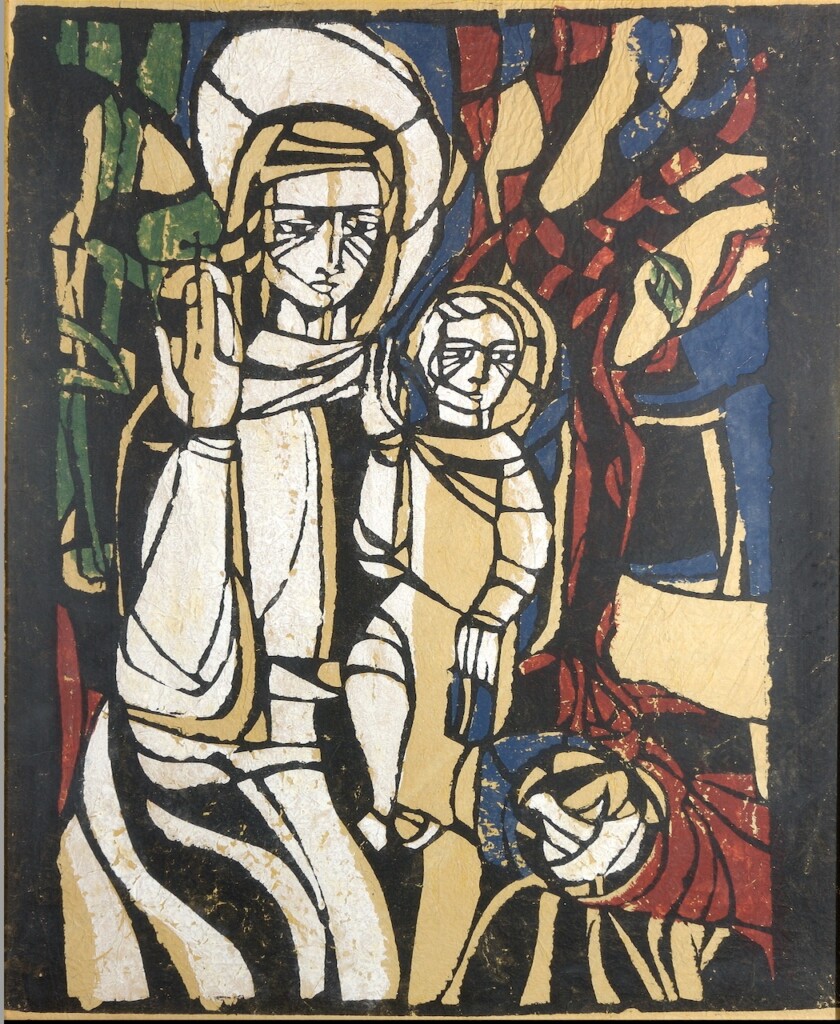
“Madonna and Child”
A primary tenet of her philosophy of art was “The Adventure of Seeing!” The creative environment and diverse collections of her studio enhanced her students’ power to see beyond the external and to venture into “the within” in their exploration and experimentation with various media.
Sister Mary Noreen perceived art as a positive challenge. “It is a means by which we can explore and enjoy our world — both the inner world and the outer one,” she said. “Like life, art is a constantly growing experience. It does not disregard suffering. Rather, it is a tool for thinking and a source of new vision.”
Sister Mary Noreen recognized the value of art to human life and spirit. Whether participating in the richness and appreciation of the work of others, or imparting the values and principles of art to learners, she understood that art making and art immersion are important to the full development of the human person.
Holy Names History – Memorial Art
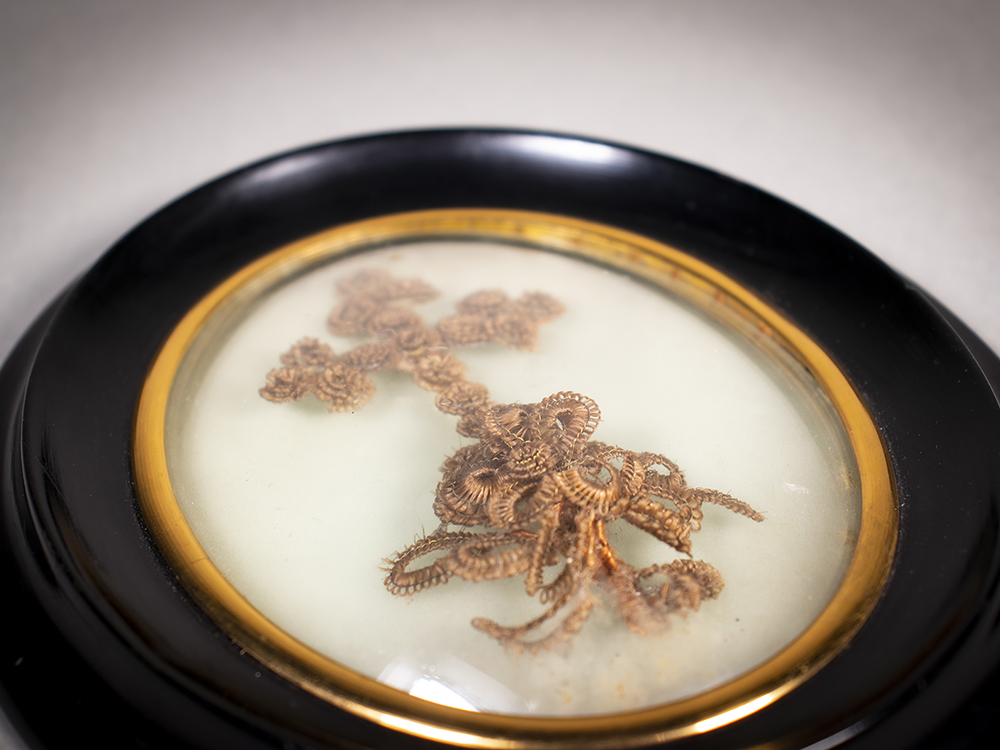
Victorians used hair art, worn as jewelry or crafted into elaborate display pieces, to mourn the loss of loved ones. This piece contains the hair of our foundress, Blessed Mother Marie Rose Durocher.
Photo courtesy of SNJM U.S.-Ontario Archives.
We’re sharing objects from the Archives of the Sisters of the Holy Names of Jesus and Mary. The Archives catalogues historical records, objects and publications in order to preserve the history of our institution, schools and ministries.