
spacer
spacer
spacer
spacer
News
Interview with Sister Karen Conlin: 45 Years of Teaching at the Holy Names Music Center
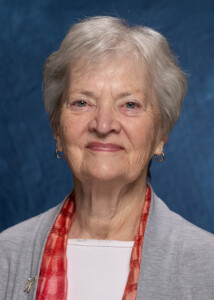
SNJM Sister Karen Conlin has dedicated forty-five years to teaching music at the Holy Names Music Center (HNMC). She uses her skill as a music educator and professional cellist to promote peace, dignity, and hope. She occasionally plays the cello with other musicians for weddings, funerals, and other special events. She is currently a member of the U.S.-Ontario Province.
The heritage of the Holy Names Music Center spans more than a century. In 1888, five Sisters of the Holy Names arrived in Spokane from Portland, Oregon, to open an elementary school; piano lessons were already being offered before the end of that first year.
What is special about the HNMC, and what do you like most about it?
The Holy Names Music Center is distinguished by its vibrant, collaborative environment. I deeply value the opportunity to work alongside such a dedicated faculty, where we don’t just share teaching techniques and ideas, but also enjoy a genuine sense of camaraderie through our joint projects.
The Center provides us with dedicated teaching studios and access to the recital hall for performances. Perhaps most significantly, the school manages all billing and financial logistics with families, allowing us to focus entirely on our students. I also find great joy in the variety of our student recitals—ranging from piano and strings to vocal and guitar—and the fact that our facility supports summer camps, group lessons, and rehearsal space for local orchestras.
How are the HNMC’s activities in line with the Sisters of the Holy Names’ mission or educational goals?
Our work is rooted in the legacy of Mother Marie Rose, who founded the community on the conviction that education is a matter of justice and compassion—one that should be accessible to all children, regardless of wealth.
We believe in educating the “whole human person,” which means nurturing the soul and a sense of beauty alongside academic subjects. Our goal is to enrich every student: while some will pursue music as a career, others will find lifelong personal pleasure in playing, and many will become informed, appreciative audience members. To ensure this mission remains inclusive, we offer a generous financial aid scholarship fund that serves as a cornerstone of our community.
What difference can such an organization make in a society?
The Holy Names Music Center serves as a pillar of stability; our long-term presence in the Spokane area is a testament to our commitment to the community. By offering music education in a wide array of instruments and styles—through both private and group instruction—we provide a vital cultural and educational resource that enriches the lives of local residents.
What are your hopes for the future of the HNM Center?
My primary hope is to secure the long-term sustainability of the Center. This support will allow us to better invest in our dedicated faculty and ensure our facilities remain a high-quality environment for learning, preserving our status as a premier space for musical growth for years to come.
Learn more about the Holy Names Music Center at hnmc.org.
Originally published Feb. 20, 2026, on snjm.org: https://snjm.org/en/blog/2026/02/20/interview-with-sister-karen-conlin-45-years-of-teaching-at-the-holy-names-music-center/
Interview with Sister Joanne Pundyk: A Legacy of Service in Brazil
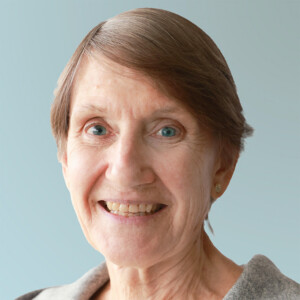 Sister Joanne Pundyk, SNJM, has been serving in Brazil since 1987, where she is one of five SNJM Sisters who founded the Centro Social Madre Maria Rosa. Located in the city of Maceió, the center serves the community by offering educational and recreational programs for children and adolescents (ages 7–14), artisanry classes and adult literacy initiatives.
The center’s mission is to empower those in vulnerable situations through comprehensive development, active solidarity, and advocacy aimed at transforming unjust systems to ensure human dignity. This mission also encompasses supporting people affected by human trafficking, a critical issue in the region.
From a Brazilian perspective, how would you describe the current landscape of human trafficking?
The issue of human trafficking continues to be a massive problem that undermines the human and spiritual values of the Brazilian people. It occurs on local, national and international levels. It is directly related to impoverishment, a lack of gender equality and a complete disregard for human dignity. A significant percentage of the persons caught in the web of human trafficking come from the northern and northeastern regions of the country—regions which have the highest number of people living in vulnerable conditions. On the positive side, there is a national plan by the federal government, now in its fourth edition, to combat human trafficking and involve the population in reporting violations. Networks, such as Rede Um Grito Pela Vida, are directly involved in the struggle to eliminate this evil.
Regarding the efforts to address human trafficking, what do you consider to be the primary achievement of Centro Social Madre Maria Rosa?
The Centro Social Madre Maria Rosa—located in the city of Maceió on the northeastern coast of Brazil, which receives nearly a million tourists per year—is a safe harbor for children, adolescents and women living on the periphery of the city. In terms of human trafficking, we have been able to raise awareness regarding what it is, how it happens, its consequences and our responsibility to report suspected cases. Education is a vital element of prevention, and prevention saves lives.
What has been your greatest source of satisfaction after all these years dedicated to helping young people? What drives you to pursue your mission in Brazil?
I am happy that, as a team of dedicated people, we have provided a safe place for children, women and their families to value their human dignity, develop their talents and assume their roles in their community. People know that we are there for them, and so they become “multipliers” of what they have learned at our center. I continue to live out my mission in Brazil because I am called to do so; it is a vocation. I experience much happiness and peace in being part of a group of people who are signs of hope among the challenges and adverse situations of our reality. The love and resilience of Mother Marie Rose is a constant inspiration for me.
Originally published March 24, 2026, on snjm.org: https://snjm.org/en/blog/2026/03/24/interview-with-sister-joanne-pundyk-a-legacy-of-service-in-brazil/
Interview with La rue des Femmes on Women’s Homelessness
In Canada, nearly 1,700,000 people[i] have reported experiencing homelessness at some point in their lives. In the province of Québec, approximately 330,000 people[ii] have gone through homelessness. Among them, 37,400 women have experienced visible homelessness, meaning they had to live on the street, in a park, a car, or a makeshift shelter.
Recently, La Presse reported that in 2025, “seven emergency shelters for homeless women in Montréal,” Québec’s largest city, “recorded more than 41,000 refusals for accommodation due to lack of space.”
In this context, an organization like La rue des Femmes, which “provides curative and preventive relational health care to women experiencing or at risk of homelessness,” is essential.
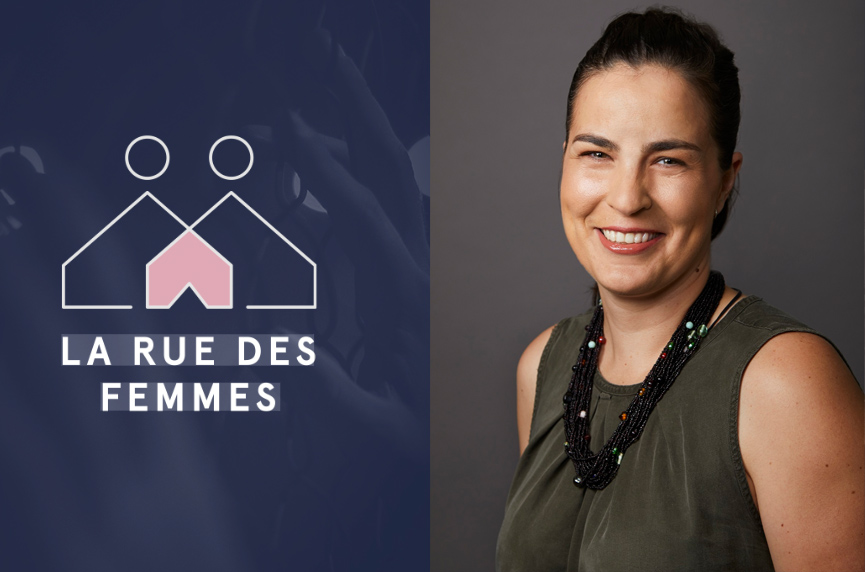
The Deputy Executive Director of La rue des Femmes, Louise Waridel, answered our questions to shed light on the urgent issue of women’s homelessness. It is worth noting that this organization is part of the collaborative ministries of the Sisters of the Holy Names of Jesus and Mary.
Have you noticed improvements or increased vulnerability in women’s living conditions over the past few years?
I have been working in the field of homelessness and living in Montréal for the last 20 years. It is undeniable: we are seeing a dramatic increase in the number of people experiencing homelessness and a significant deterioration of women’s conditions. Their reality has become more complex, more intense, and, in many cases, more difficult.
However, it would be unfair to say that no progress has been made. There is greater public recognition of the realities faced by women experiencing homelessness, more research on the subject, and more discussion of trauma-informed approaches.
Nevertheless, on the ground, needs are growing faster than resources. Teams are exhausted, waiting lists are getting longer, and structural solutions are slow to materialize. When resources are scarce, people in precarious situations tend to be forgotten, and we lose sight of our intention to be a community grounded in values of hospitality, democracy, and openness to the world.
In times of crisis, those who most quickly find themselves in situations of precarity and adversity—those who endure the most difficult circumstances—are women, racialized people, Indigenous people, people of diverse gender identities, and those who are physically, psychologically, or relationally vulnerable.
Why do we speak of the “invisibility” of homelessness among women?
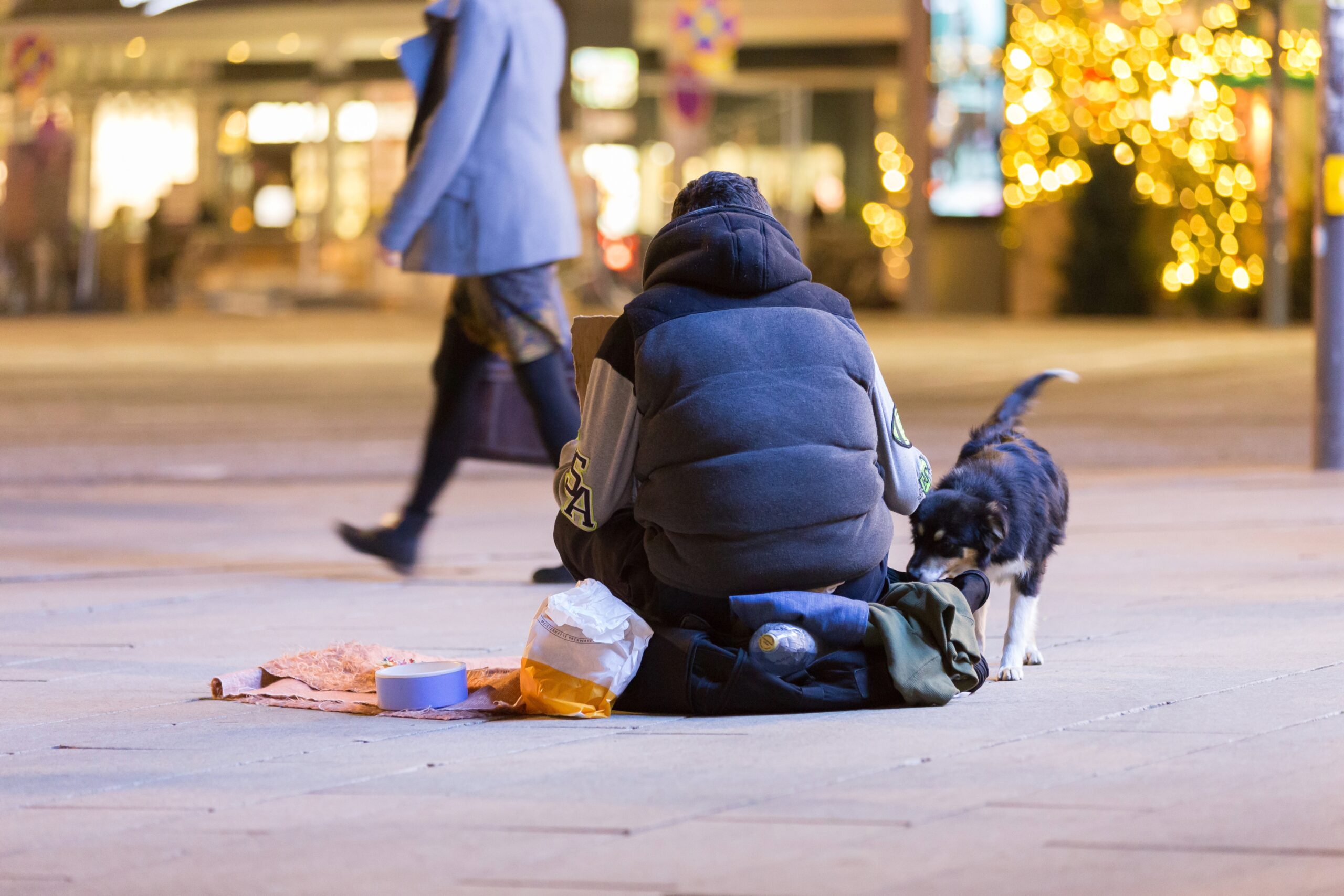
We speak of invisible homelessness among women because their reality often does not fit the public image of homelessness. When we imagine a homeless person, we often think of someone sleeping on the street, visible in public spaces. For many women, this is not the case; they experience what is known as “hidden” or “invisible” homelessness.
Rather than sleeping outside, some women choose to stay on the sofa of a relative, an acquaintance, or a partner, often accepting precarious arrangements to avoid the streets. They may stay temporarily with someone in exchange for domestic services, financial contributions, or, sometimes, under pressure. This arrangement allows them to avoid some of the immediate dangers of the street, but it creates unequal power dynamics that lead to exploitation.
Women also develop protection strategies to avoid being identified as “homeless.” They may make great efforts to maintain a neat appearance, hold on to a job, or stay active in they community to hide their housing instability. This ability to adapt contributes to their invisibility. Fear of violence also plays a central role in these strategies.
Why are homeless women more likely to experience violence?
Women experiencing homelessness live in an environment marked by instability, insecurity, and various forms of violence (physical, psychological, sexual, economic, and systemic). In a context where resources are limited and everyone is struggling to meet basic needs—food, housing, safety—tensions can quickly escalate into violence.
Living on the street therefore becomes a daily struggle for survival.
Substance use is also an aggravating factor. The cycle of addiction, combined with lack of sleep, malnutrition, and constant stress, can alter judgment and increase impulsive behaviors—both in the women themselves and in those around them. Situations involving the purchase, sale, or exchange of substances particularly expose women to exploitation, coercion, and assault.
Women are also often perceived as physically vulnerable, which can make them prime targets for aggressors. Some may be forced to exchange sexual services for a place to sleep, food, or protection, placing them in deeply unequal power dynamics.
Systemic violence further compounds these challenges. Social, judicial, and medical institutions are not always well adapted to the realities of homeless women. They may encounter judgment, stigma, or a lack of understanding. Prejudices suggesting they are responsible for their situation, or that they are unstable, or not credible, further marginalize them and limit their access to protection and support.
In short, women experiencing homelessness are more exposed to violence due to a complex web of individual, social, and structural factors. Their vulnerability is not a personal weakness, but rather a result of a context shaped by gender inequality, cumulative trauma, and insufficient protection.
Why is it so difficult for these women to obtain housing?
The current situation is complex. The shortage of affordable housing, rising rents, and high demand place landlords in a position of power, allowing them to be much more selective when choosing tenants. In this context, women receiving social assistance, those without stable employment, or those without recent landlord references are often excluded. Prejudices related to homelessness, mental health, or substance use further reinforce this exclusion.
Paradoxically, when we talk about homelessness, the greatest challenge is not only finding housing, but keeping it. If we skip essential steps, we risk setting homeless people up for failure again, and making them even more vulnerable.
When a person’s health has deteriorated to the point where going outside, cooking, or taking care of personal hygiene feels like an impossible task, maintaining housing is extremely difficult. When past traumas make the darkness of the night, noises, and the loneliness of an apartment feel terrifying, it only takes a few weeks for a person to return to the street.
Almost all the women who come to La rue des Femmes have experienced trauma in the face of dehumanizing structures and systems. As a result, they have lost trust in themselves and in others. This is why, at La rue des Femmes, we speak of relational health—the capacity to be in connection with oneself and with others. When something inside has been broken, time is needed for healing before a person can begin rebuilding her life.
That is why the solution cannot be limited to simply obtaining housing. First, we must offer a safe environment where healing can begin. We need spaces where trauma is recognized, where support is continuous, and where women can reflect on the type of environment that would truly suit them.
Sustainable housing is built through listening, psychosocial support, and the gradual rebuilding of autonomy. Sometimes, the answers women give regarding about their needs do not fit the traditional models we imagine—which challenges us to rethink our approaches and adapt our solutions.
[i] Statistics Canada, 2023
[ii] Government of Québec, 2021
Originally published Feb. 27, 2026, on snjm.org: https://snjm.org/en/blog/2026/02/27/la-rue-des-femmes-womens-homelessness/
Interview with Sister Ana María Vilca Mamani, New Regional Representative of Talitha Kum
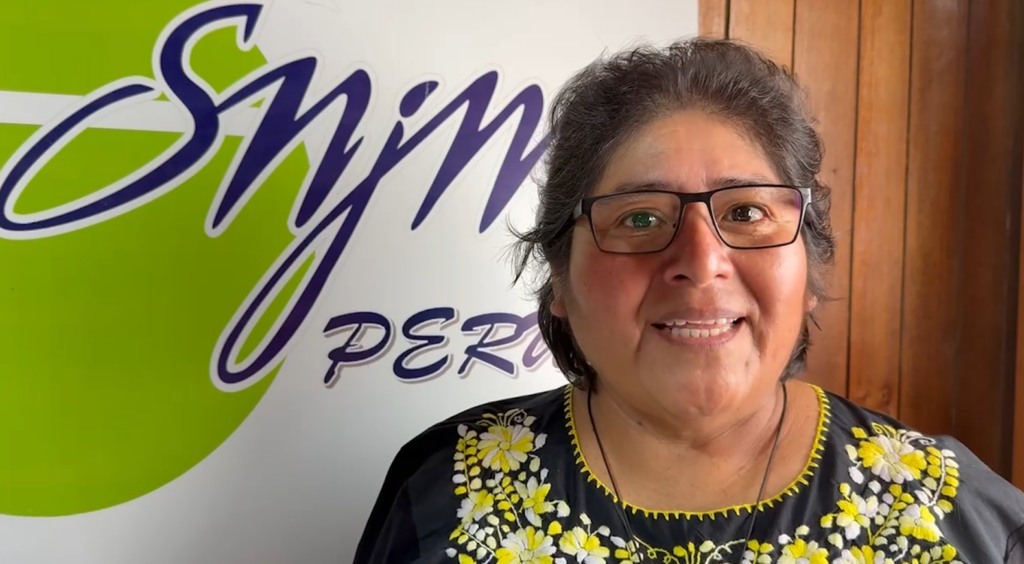
Sister Ana María has been a member of the Sisters of the Holy Names of Jesus and Mary (SNJM) since 1999. She is currently part of the U.S.-Ontario Province.
Talitha Kum is the international network of consecrated life against human trafficking.
Sister Ana María, how long have you been involved in the work against human trafficking, and in what ways do you contribute?
Although I do not hold an official position within the SNJM Congregation, in recent years I have participated in the efforts against human trafficking in several ways:
- as the National Coordinator of the Kawsay Peru Network since 2020.
- as a member of the Commission Against Human Trafficking of CLAR (Latin American Confederation of Religious) since 2023.
- as the Coordinator of the Training Program for Young Leaders against human trafficking for Latin America and the Caribbean since 2023.
What does this appointment as the Regional Representative of Talitha Kum mean to you?
I accept the role of Regional Representative of Talitha Kum for Latin America and the Caribbean with deep gratitude and a keen sense of responsibility. I am grateful for the trust placed in me to continue this shared mission in service of human dignity, particularly for those most vulnerable to trafficking and exploitation.
The Sisters of the Holy Names of Jesus and Mary took a stand against human trafficking as early as 2004. My journey within the Kawsay Peru Network—which I joined in 2016 and have coordinated nationally since 2020—has strengthened my conviction in the value of networking and collective action. I feel this appointment is a recognition of the path we have traveled together and our membership in various continental networks that share the same mission.
Do you believe you can bring about changes or contribute to the evolution of certain processes?
My commitment as Regional Representative is to listen, coordinate, and strengthen existing processes in different countries, fostering the exchange of experiences, local leadership, and a shared regional vision that responds to our challenges.
How do you view the current situation and what are your hopes for the future?
Latin America and the Caribbean face structural challenges such as poverty, violence, organized crime, climate change, and forced migration, which increase the vulnerability of many people. In this context, I recognize with hope the resilience and commitment of national networks, as well as the active participation of young leaders and lay collaborators who, alongside the sisters, are advancing pathways of prevention, protection, and solidarity.
Talitha Kum, as an international network, invites us to journey together by coordinating comprehensive responses ranging from prevention to protection, including advocacy and accompaniment, in a dynamic of collaboration, listening, and mutual learning between regions.
I look toward the future with hope and the certainty that by working as a network and in spirit of synodality, we can continue to promote the freedom, justice, and dignity of all people. I thank Sister Abby and my Congregation for their trust and encouragement as I assume this new service.
I entrust this service to God and Mother Marie-Rose, for a world free from human trafficking.
You can learn more about Talitha Kum here: www.talithakum.info/en/
Originally published Feb. 4, 2026 on snjm.org: https://snjm.org/en/blog/2026/02/04/interview-with-sister-ana-maria-vilca-mamani-new-regional-representative-of-talitha-kum/
The SNJM Historic Congregational House Will Serve Generations to Come
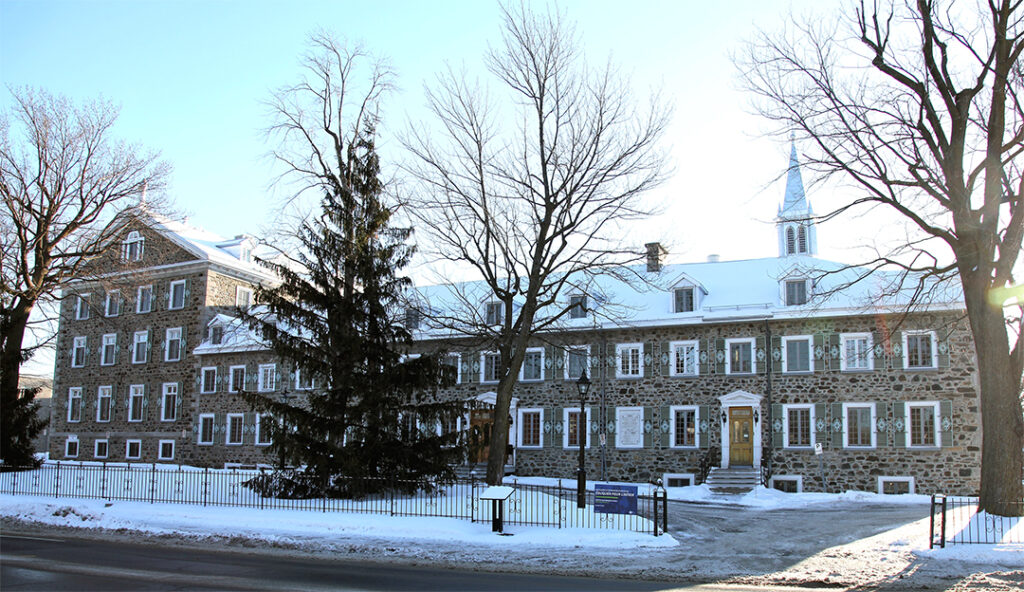
LONGUEUIL, Quebec — Today, the Sisters and representatives of the City signed the deed of sale at the Congregational House of the Sisters of the Holy Names of Jesus and Mary—an important milestone that ensures this historic site will continue to serve the public for generations to come.
Since 1844, the Congregational House has served as a beacon of education, culture, and service, reflecting the Sisters of Holy Names’ enduring mission. With the City’s acquisition, the property will now enter a new chapter dedicated to expanded community services, opportunities, and outreach, while honoring its rich heritage as a designated historical property.
“The Sisters of the Holy Names of Jesus and Mary look forward to the City’s vision and planning for this remarkable site,” said Sister Linda Haydock, congregational leader. “We are pleased that it will support community groups and remain a place of cultural importance, learning, gathering, and outreach.”
By entrusting their heritage site to the City of Longueuil, the SNJM Sisters believe it will remain a supportive community hub where the social, educational, and cultural traditions of the premises will be maintained and preserved beyond the life of the Congregation.
“As Sisters of the Holy Names of Jesus and Mary, it is our wish that our property continues to reflect our values for decades to come and that it be integrated into a project that enhances Longueuil’s historical and socio-cultural heritage,” stated Sister Denise Riel, provincial leader.
The successful agreement was made possible through the visionary leadership of Mayoress Catherine Fournier, a rigorous four-year study and strategic planning process, and the Sisters’ willingness to accommodate the city’s needs. Together, these efforts ensure that the buildings and grounds will continue to benefit the people of Greater Longueuil well into the future.
Supported by Bâtir son quartier, the partnership with the city was a shared commitment to preserving Longueuil’s heritage sites, while meeting the community’s evolving needs, thus transforming this historic site into a vibrant hub for community life.
Originally published Jan. 16, 2026: https://snjm.org/en/blog/2026/01/16/the-snjm-historic-congregational-house-will-serve-generations-to-come/
Cultivating the Global Sisterhood
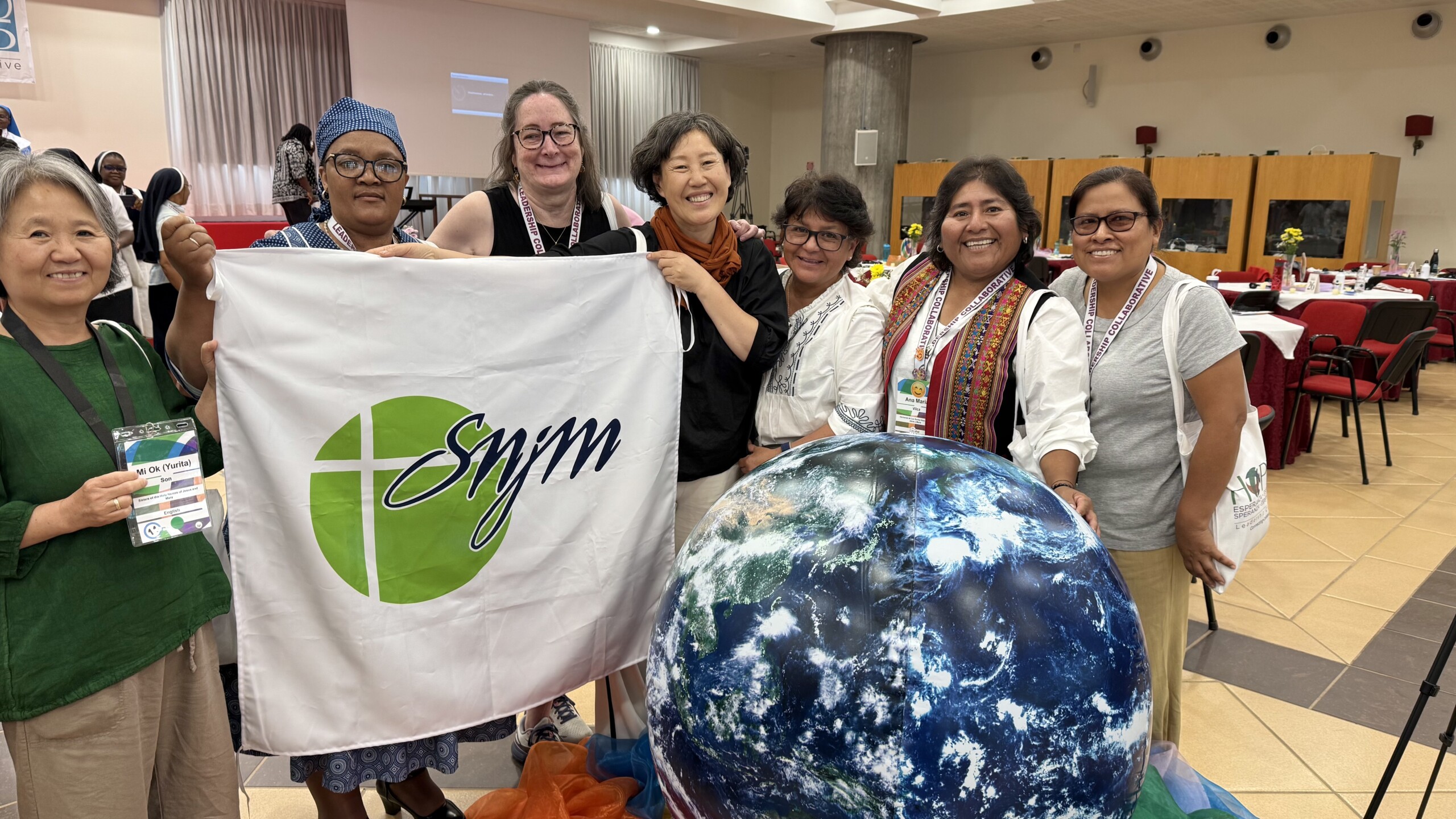
SNJM Sisters from Peru, Lesotho and the U.S. attend the Hope 2025 conference in Rome.
Sisters reach beyond congregational boundaries to strengthen communal spirituality.
“Unite us in our global sisterhood as we lead ourselves and one another with compassion while inspiring hope in the world,” proclaims the blessing prayer for the Hope 2025 retreat in Rome. SNJM Sisters from Peru, Lesotho and the U.S. joined over two hundred women religious under the age of 65 to discuss the future of religious life and the role of women as leaders in the church.
Hope 2025 was hosted by the Leadership Collaborative (LC), an organization formed in 2012 to foster transformational leadership for religious life. To advance the growth of the global religious community, LC empowered women religious to connect across cultural boundaries at the weeklong gathering in June. “Something new was being breathed into life,” said LC’s Associate Director Tammy Townsend.

Sisters from 45 countries joined together in conversation and prayer. “When we from different countries met, it was more than simple joy,” said Sister Sophia Park. The group found solidarity through their commitment to follow Jesus, live the gospel values and serve people on the margins. From that communal commitment burst a sharing of experiences of joy, challenge, loss and support.
Sister Lourdes Quintana Cortavitarte was energized by groups discussing changes in their communities and models of leadership through uncertain times. “I saw new generations very open to the challenges that may arise, to the vision of a freer development of humanity.” Across congregations, Sisters shared their processes for embracing the evolving realities of religious life, for letting go of what is ending, for cultivating hope.
By the end of the week, unified by their common mission and strengthened by their diverse experiences, each Sister was prepared to return to their local community and share knowledge from the emerging global sisterhood. As Hope 2025 ended, Sister Michelle Garlinski reflected, “The world is calling for action, and religious women will continue to respond as those who have gone before us.”
Book Corner
Sharing SNJM Spirituality through Published Works
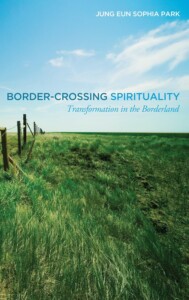 Border-Crossing Spirituality
Sophia Park, SNJM
Almost every religious tradition has within it a spiritual teaching on “being in between” and the transformation that occurs in the borderland. Sister Sophia Park explores the values of hospitality, friendship and present awareness that accompany people who cross cultural, geopolitical and existential borders.
Border-Crossing Spirituality
Sophia Park, SNJM
Almost every religious tradition has within it a spiritual teaching on “being in between” and the transformation that occurs in the borderland. Sister Sophia Park explores the values of hospitality, friendship and present awareness that accompany people who cross cultural, geopolitical and existential borders.
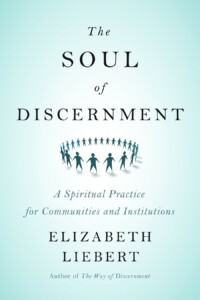 The Soul of Discernment
Elizabeth Liebert, SNJM
“Discernment may very well be the single most important Christian spiritual practice for dealing with the complexity of our contemporary lives,” writes Sister Elizabeth Liebert in The Soul of Discernment. For leaders seeking to contribute to the collective future of our communities, Sister Elizabeth’s book is a guide through the Social Discernment Cycle, a collaborative process for groups seeking God’s call in decision making.
The Soul of Discernment
Elizabeth Liebert, SNJM
“Discernment may very well be the single most important Christian spiritual practice for dealing with the complexity of our contemporary lives,” writes Sister Elizabeth Liebert in The Soul of Discernment. For leaders seeking to contribute to the collective future of our communities, Sister Elizabeth’s book is a guide through the Social Discernment Cycle, a collaborative process for groups seeking God’s call in decision making.
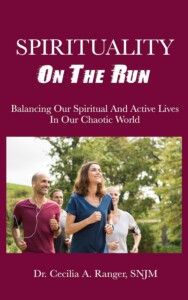 Spirituality On The Run
Cecilia Ranger, SNJM
Sister Cecilia Ranger has played the lifelong chess game of balancing her spiritual and active lives. “Our fascinating but chaotic world offers us the enormous challenge of creating a rhythm in our lives, a life-enhancing harmony between action and contemplation.” In Spirituality On The Run, she explores how we can live the rhythm of a balanced life.
Spirituality On The Run
Cecilia Ranger, SNJM
Sister Cecilia Ranger has played the lifelong chess game of balancing her spiritual and active lives. “Our fascinating but chaotic world offers us the enormous challenge of creating a rhythm in our lives, a life-enhancing harmony between action and contemplation.” In Spirituality On The Run, she explores how we can live the rhythm of a balanced life.Living Our Spirituality
“From our charism flows a spirituality that is the wellspring of our life…”
-SNJM General Chapter Acts, 2016
Across our congregation, Sisters and Associates shared their personal reflections on the meaning of spirituality. Their words reveal a way of living that is embodied, creative and grounded in the presence of a loving God.
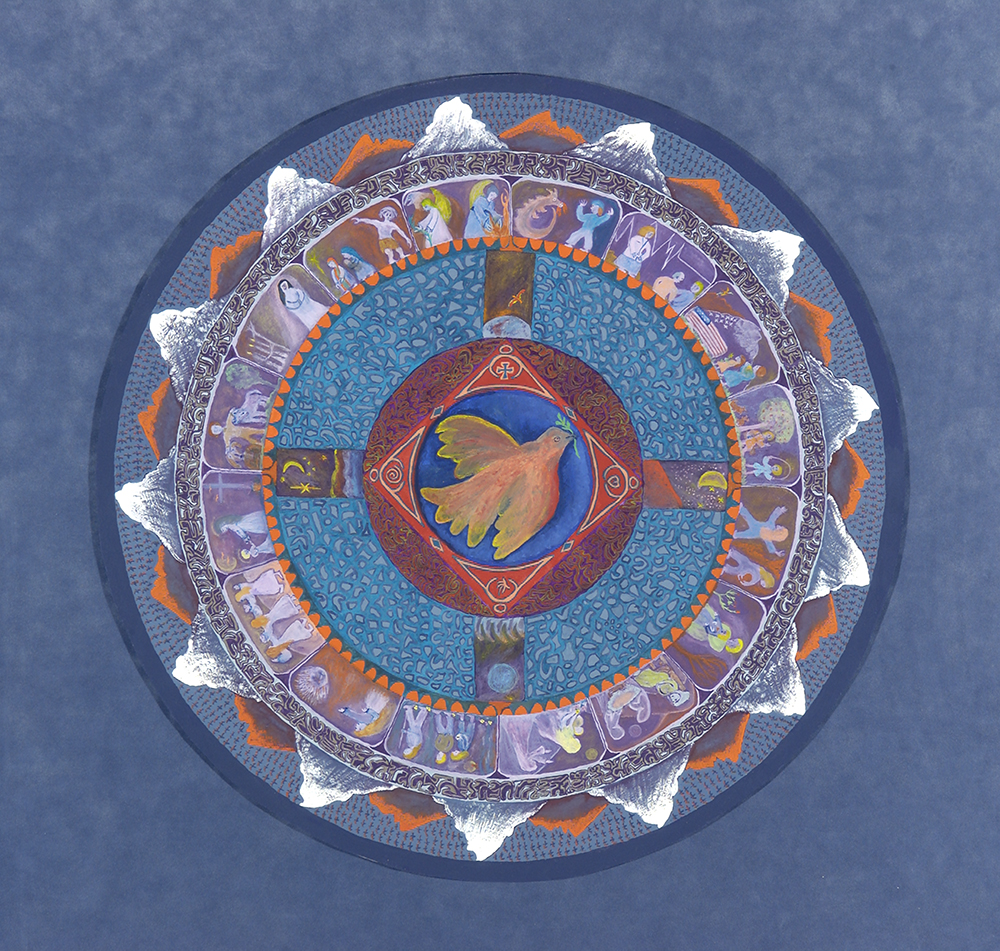
Mandala by Judith Mayer, SNJM
Contemplative Creativity
Art becomes a form of prayer when it inspires stillness, imagination and a sense of wonder. In these pages, we share works by SNJM Sisters that invite reflection, meditation, hope and joy.
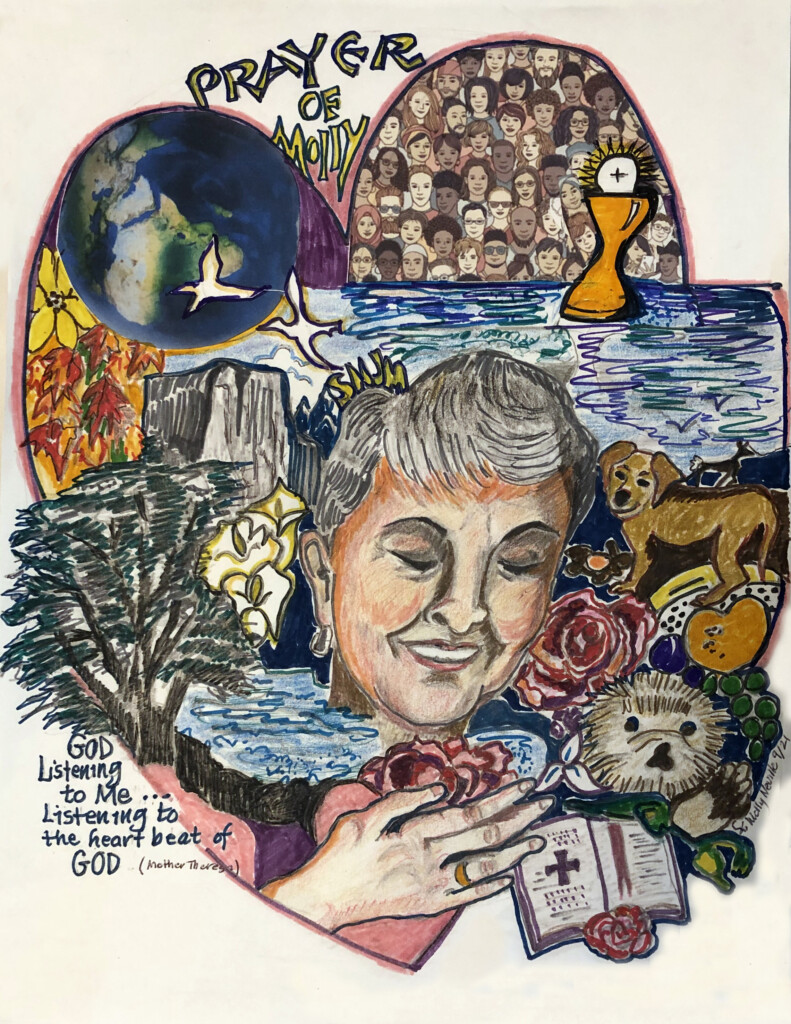
“Prayer of Molly” by Molly Neville, SNJM
Practices of Prayer and Presence
Our spiritual practices show how prayer and mindfulness are intentionally woven into daily life, offering quiet, continual connection to each moment.
Sister Beth Liebert: The Ignatian practice of entering imaginatively into a Scripture text and letting the Spirit take over in my imagination has made Jesus come alive to me as a real person I can converse with at any time. I also use the Ignatian Rules for Discernment of Spirits to make thoughtful, Spirit-led decisions. Through my teaching I have tried to demystify these resources so others may experience their own personal relationship with Jesus as the ground of their lives.
Sister Fran Kearney: Whenever I am writing, I begin with JMJ (Jesus, Mary and Joseph) at the top of the page, invoking the Divine to guide my thoughts and words. It may be a to-do list, a shopping list or notes from a meeting. I depend on the Spirit to help my words in letters and notes be thoughtful, sensitive and supportive of the recipient.
Sister JoJean Cavalli: Using the Orthodox practice of our “Desert Fathers,” an interior recitation of The Jesus Prayer: Jesus, Son of the Living God have mercy on me, a sinner, helps center me in the present moment. This practice resonates with one’s breathing, and I like to think the Holy Spirit continues the prayer in me, even as I fall asleep.
Routines That Root Us
Familiar habits, daily rhythms and long loved prayers are touchstones throughout our days. These simple, faithful practices become anchors for presence, peace and spiritual connection.
Sister Peggy Kinzie: Humming a simple mantra like “Be Still and know I am God” or “Jesus, I know you are near,” can help quiet an active mind and body.
SNJM Associate Helen Janisse: A meaningful part of my spiritual life is living each day with a special scripture passage, phrase, or word, often drawn from a daily reflection.
Melodies of Grace
Through rhythm, harmony and silence, music is a living prayer, woven into worship, reflection and the flow of daily life. Music offers moments of grace throughout our days.
Sister Linda Riggers: All my life, music has fed my spirit. Listening to music, playing music, brings the details of everyday life into a new light, helping me spot where the Divine rests in my surroundings.
Sister Claire Durocher: As I drive, I often find myself thanking God for the gift of still being able to do so and turning street names into moments of prayer like singing “Shepherd Me, O God” when I pass Shepherd Street.
Sister Janet Walton: When singing or making music on the piano, I create moments for myself of courage, of resilience, of joy. When I listen to music, I know what beauty is, that hope is real. I know, within and without, that God is more, one note after another.
Words That Hold Wonder
Spirituality often resides in our deepest questions and moments of awe. Through poetry and reflection, we are called to observe and ponder.
Hope is Rising – Mary Lyons, SNJM
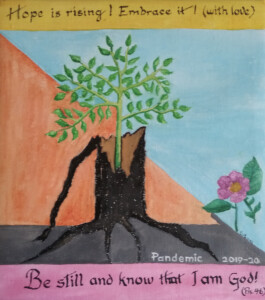
“Hope Is Rising” by Mary Lyons, SNJM.
The focal point of this image is the charred remains of an innocent victim of a forest fire portrayed in Black.
Beneath the tree is a band of Grey, a symbol of serious depression which can quickly descend over people who experience total helplessness.
A triangle of Orange symbolizes anxiety/not hopelessness.
A blue triangle is a shower of calm which encourages a sense of Hope.
Hope is quickly discovered in the green of New Birth rising from charred remains.
The flower, a flicker of Joy, which hopes to survive but is unstable and cannot yet find her rootedness.
The band of yellow is total Joy which recognizes the gift of Hope.
The band of pink is an ecstatic awareness of the universal presence of our God of Love and of Mercy who is here for all of creation.
In all these ways, we live out a vibrant spirituality. Sister Joan Saalfeld writes, “Individual spiritual transformation is usually a quiet and gradual process. It is the fruit of openness to what happens as we try to live our lives with integrity and intention. It is not so much something we do, as something we receive when we are faithful to our journey into the mystery of God, doing our best to make each life transition as it comes to us.” This is our call, to be rooted, open and ever attuned to the Love that holds all things.
Holy Thursday Lessons from the Redwood Trees – Miriam Malone, SNJM
No one of us stands alone
We stand straight and tall
and we bend with the wind
What we know for sure
is this
the fog will lift and it is fog
that we need to live well
and fully
as we reach heights never
imagined and our roots
stay firmly grounded in
the earth
Look up and see
we can almost touch the sun!
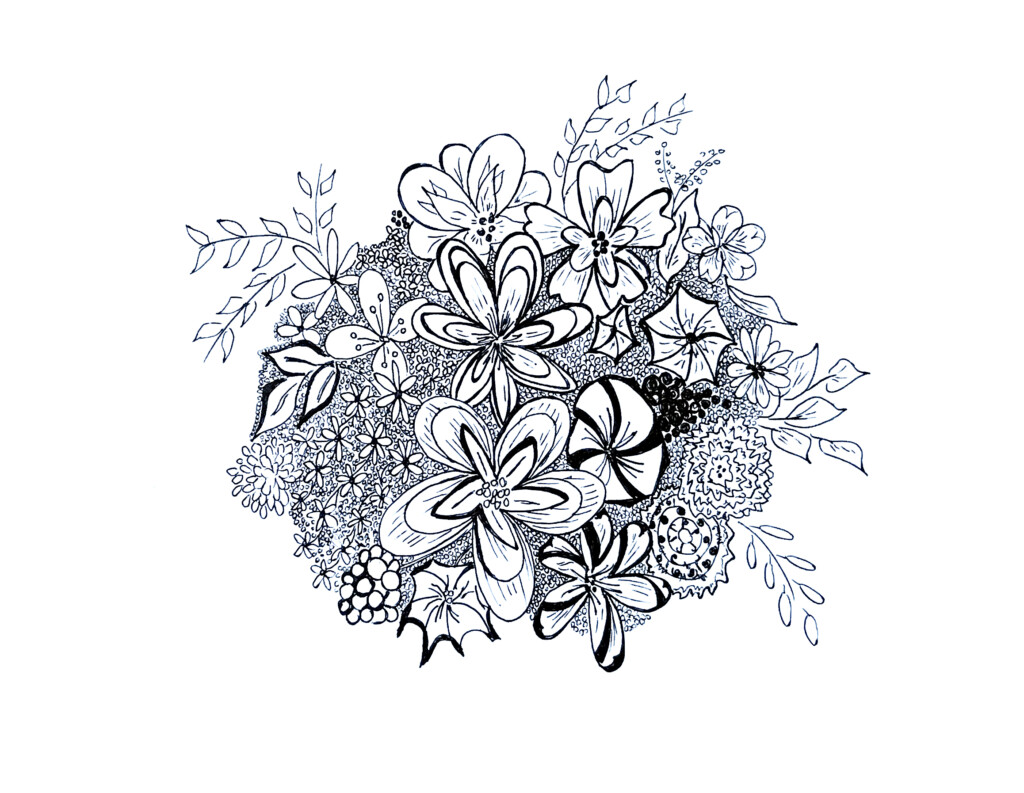
“Meditation Drawing” by Maria Faina, SNJM
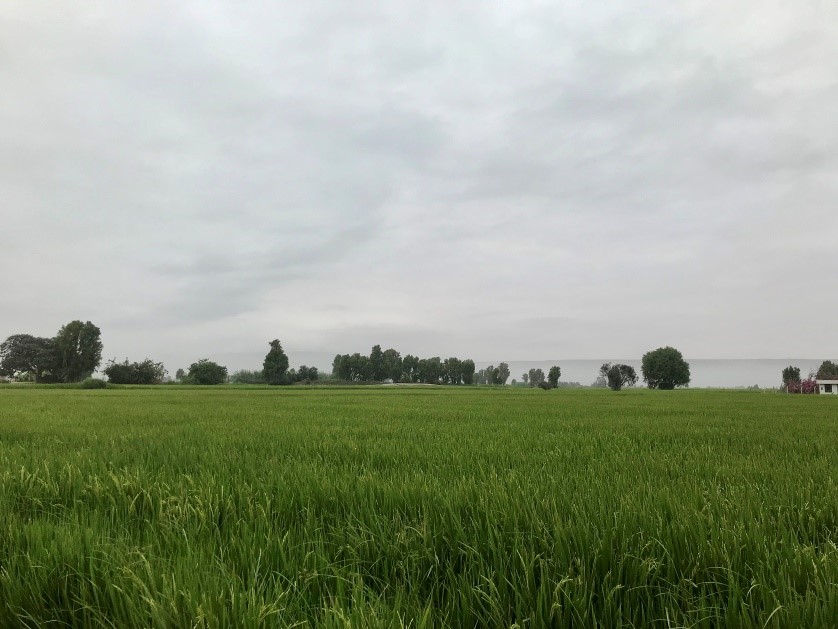
“El color de la Esperanza” (The color of hope), photograph by Ana Maria Vilca Mamani, SNJM.
Strengthening Andean Communities Through Education
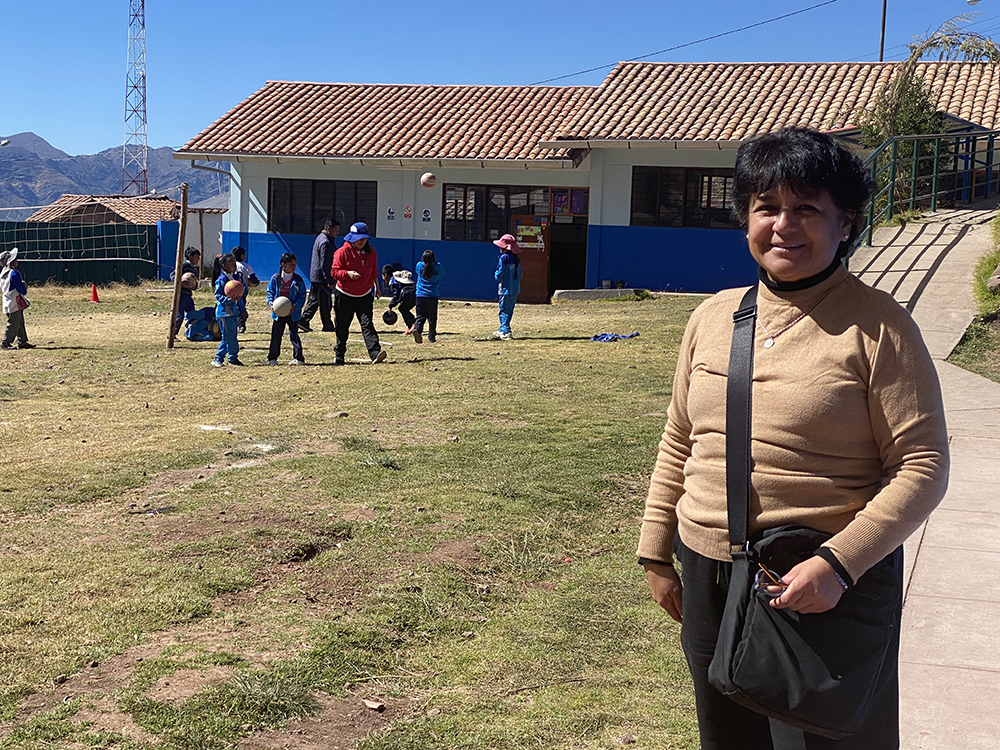
Sister Lourdes Quintana Cortavitarte at the school in Patabama, Peru.
Communities in the Andes Mountains of Peru receive little government support for education. Students need teachers. Teachers need support. Sister Lourdes Quintana Cortavitarte is helping make a difference.
Sister Lourdes first traveled to the high Andean communities in Peru’s Coya District with Sister Brigid Baumann in 2012 to support the Kausay Wasi Clinic on visits to communities that have limited access to medical care. Sister Lourdes also worked with the missionary ministry of Coya’s San Juan Bautisa Parish. She made a permanent move to Coya in 2022 to support the mountain communities.
Traveling to Patabamba, Qenqo and Sihua, Sister Lourdes created programs for young people in the villages. Her “Espere” workshop on forgiveness and reconciliation served high school students, and she ran classes teaching St. Ignatian spiritual exercises to children. To promote the Coya community’s resolve to care for the environment, Sister Lourdes organized a recycling program to collect and process plastic and cardboard waste.
“These first activities allowed me to learn more about the towns and rural communities,” said Sister Lourdes. Many years of reflection on the needs of the high Andean communities built her dream to “awaken and develop the potential that children and teachers have.”
In August 2024, with the support of grant funds and contributions from family and friends, Sister Lourdes started the “Soccoy Kicharinquin” (“Open Hearts”) program to support students and their teachers in Queqo and Sihua. The program focuses on accompanying children and young people through spiritual growth, encouraging the joy of music in children by forming community choirs, and providing resources for the local teachers.
“She supports the teachers,” said Sister Linda Patrick, a member of the SNJM Provincial Leadership Team who visited the schools in December 2024. “She is accompanying them and helping them to be better teachers.” “It’s not just the Holy Names Sisters who are doing this work. They are building a community of people who are working to serve the poor,” said Sister Linda. “All of these people are giving their time and energy to help lift people up. That is a wonderful thing. That is what we need to do. It is Mother Rose’s vision being carried out.”
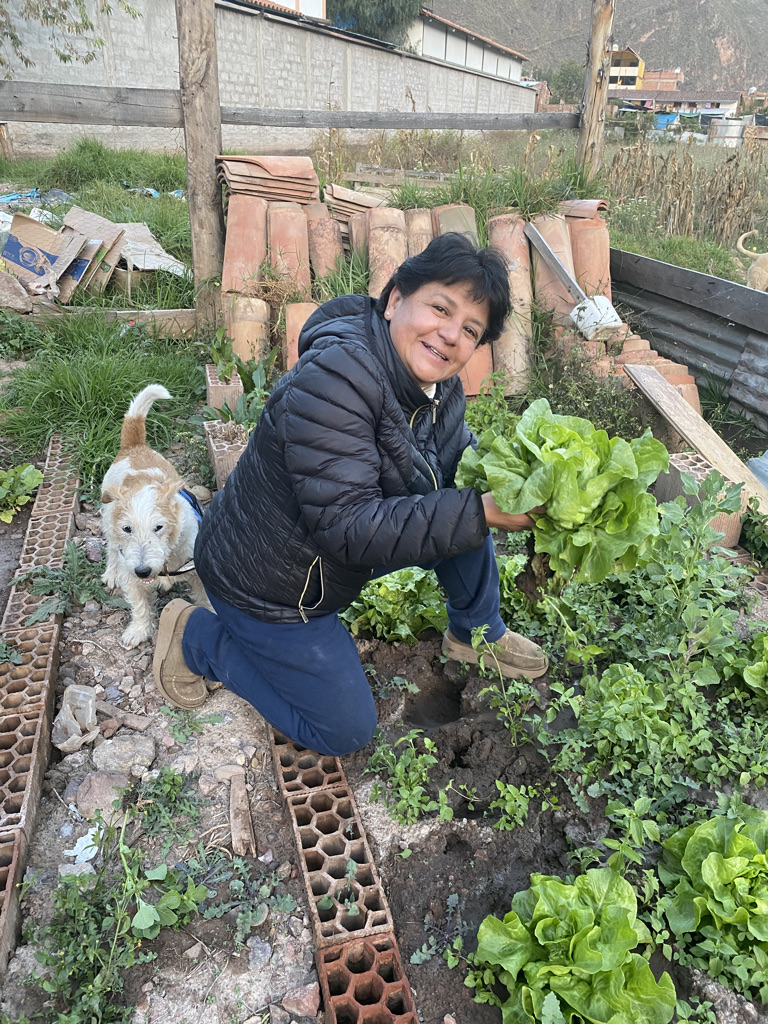
Supporting Immigrants and Refugees
SNJM’s Immigrant and Refugee Fund was established in 2019 to support organizations that directly serve people who live outside their country of origin or have been displaced within their country. On an annual basis, Sisters establish partnerships with organizations to find effective ways to provide resources for migrants and refugees.
Adelante Mujeres
Adelante Mujeres co-founder Sister Barbara Raymond.
Approximately 98% of participants in Adelante Mujeres’s programs are low or extremely low-income and an estimated 91% are first-generation immigrants. The “Casa Qui” program and storefront helps Latine women-owned businesses meet capital and financial requirements to enter the market. The “CHICAS” program served over 600 young people in 2024, providing after-school programs, field trips and summer camps.
SNJM’s grant supports Adelante Mujeres’s Leadership and Advocacy programs, including their “Immigration Academy,” which educates participants on immigration policies affecting their communities.
Through education, entrepreneurship and advocacy, Adelante Mujeres continues to create opportunities for Latine women and youth, empowering them to lead and shape a more inclusive community.
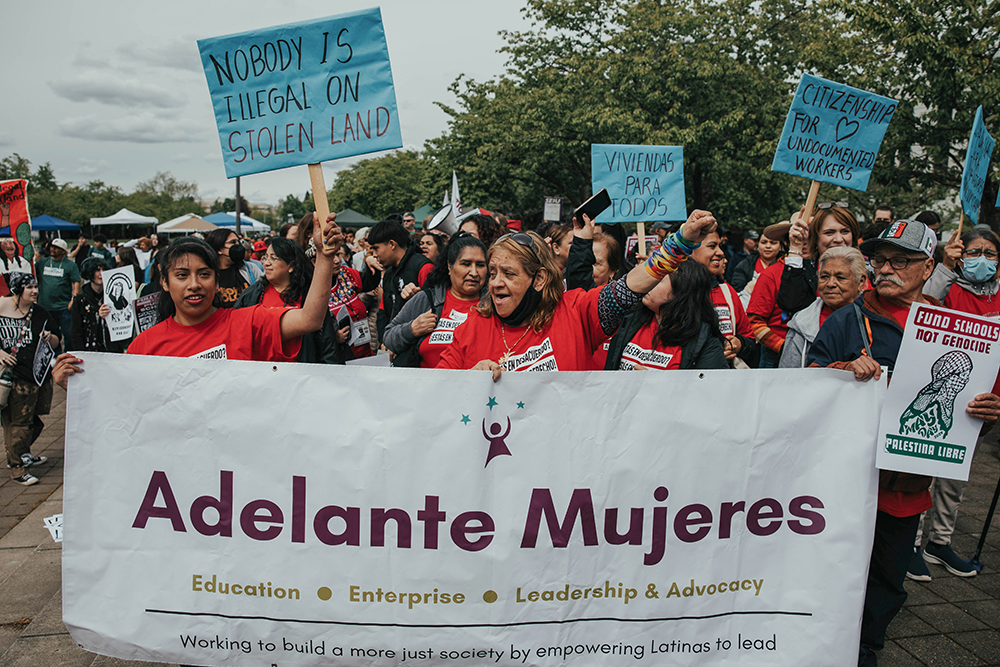
Adelante Mujeres staff and supporters participate in the annual May Day rally at the Oregon State Capital in Salem, Oregon.
Immigrant Resources and Immediate Support (IRIS)
Bellingham, Washington’s Immigrant Resources and Immediate Support (IRIS) provides immediate assistance to immigrants and refugees experiencing a temporary period of crisis. The organization works to get assistance to families as quickly as possible, cutting through the red tape that immigrants often experience attaining resources. Sister Susan Wells, a member of the SNJM Congregational Leadership Team, is a member of the IRIS Advisory Board. “IRIS is unique in that we respond very quickly to urgent situations and provide low-barrier access to support services,” she said.
SNJM’s grant will assist in funding this critical work. IRIS plays a significant role in the network of community services that respect the human dignity of all members of the Skagit and Whatcom County communities. Sister Susan summarized, “The SNJM investment in IRIS has had a tremendous direct impact on the lives of so many immigrants and refugees who often have nowhere else to turn for support.”